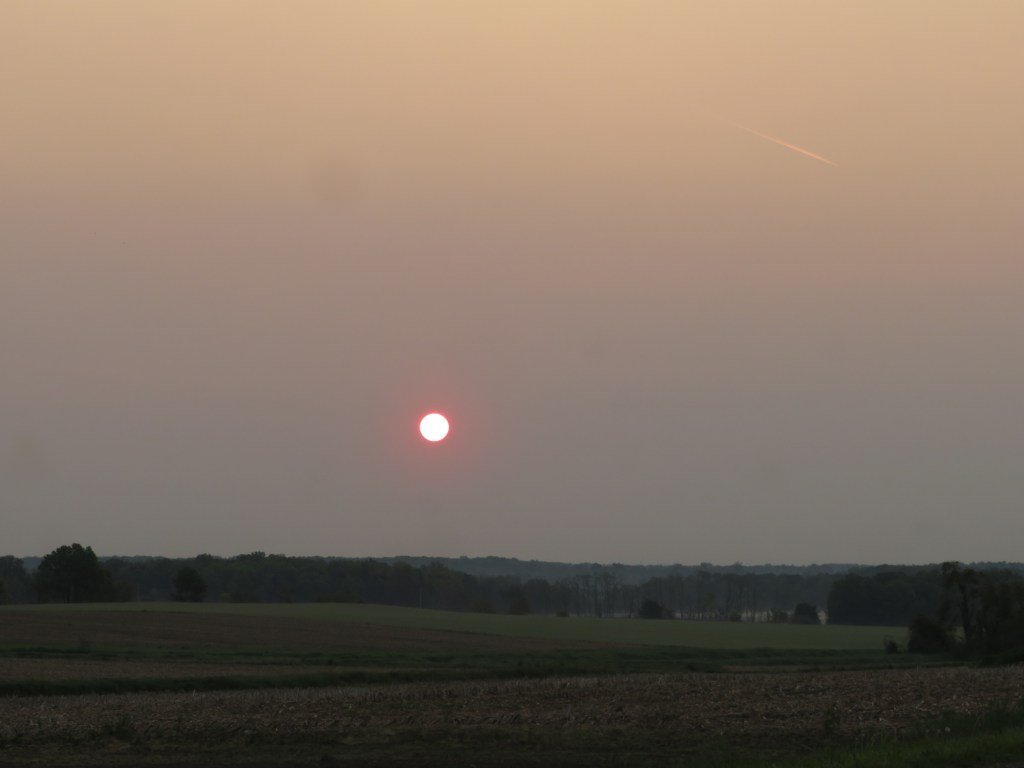
Every morning of this entire year, I have been up at dawn to photograph the sunrise. It was my New Year’s resolution for 2023; I wanted to make a record of all of the sunrises for an entire year to see what I could learn.
I have always been fascinated by the skies: The clouds, the colors of the sky, the sunrises, the sunsets, and of course, the moon and stars. It seems I am always looking up, sometimes for inspiration, sometimes to get a sense of how silly our worries are in the grand scheme of things, and sometimes just to worship our great Creator.
“The heavens declare the glory of God,” King David wrote, “and the firmament showeth his handiwork.” The King used the first six verses of Psalm 19 to describe how the sun and the skies reveal God’s glory to everyone in the world visually, so that no language barrier would prevent the people from understanding. He describes the sky as a “tabernacle for the sun”; then he compares the sun to a bridegroom coming out of his chamber, and to a strong man who rejoices to run a race.
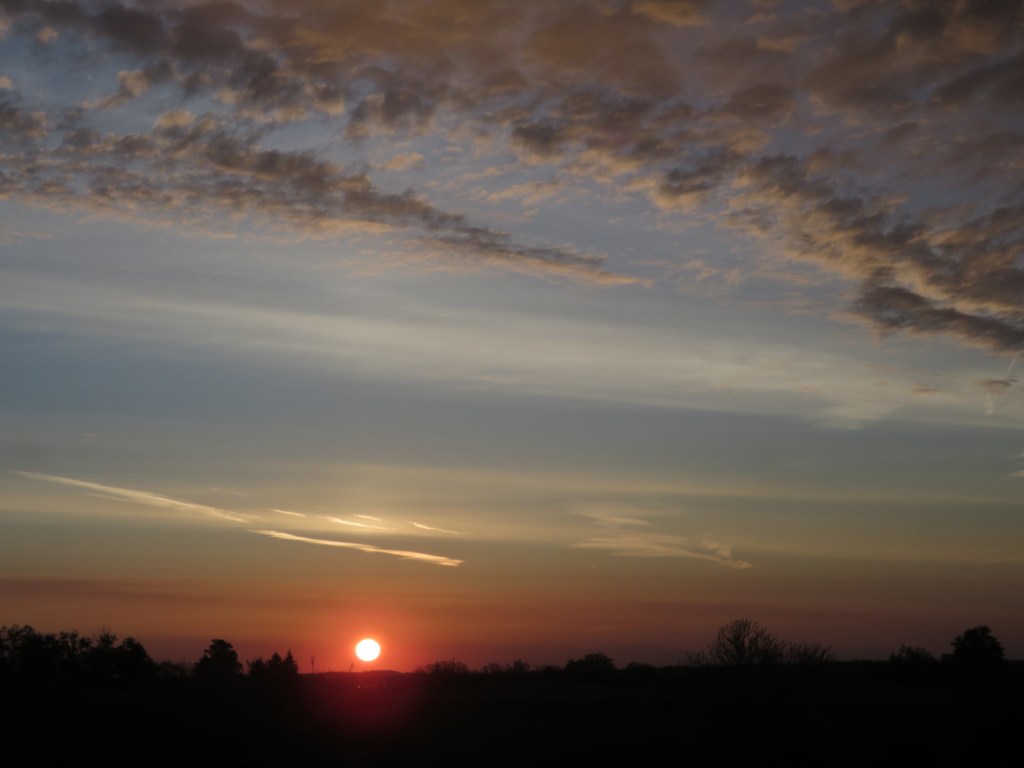
I love figurative language because so many feelings and ideas can be communicated. In fact, it can be difficult to describe the experience of watching a sunrise without using figurative language. A physical description only gives part of the story.
For instance, the sunrise is really an event that kicks off other events. Light has a way of affecting everything: Humans and animals experience a change in their genetic expression when they see the light. Plants actually move toward the light. Some flowers open in the morning after being closed all night (dandelions and morning glories do!)
The birds know that the sun is about to rise, and that first bird makes an announcement when it is still dark. After a while, a few sleepy voices join in. The chorus grows gradually in volume and excitement as the sunrise nears, and when that bright ribbon appears, they all cut loose!

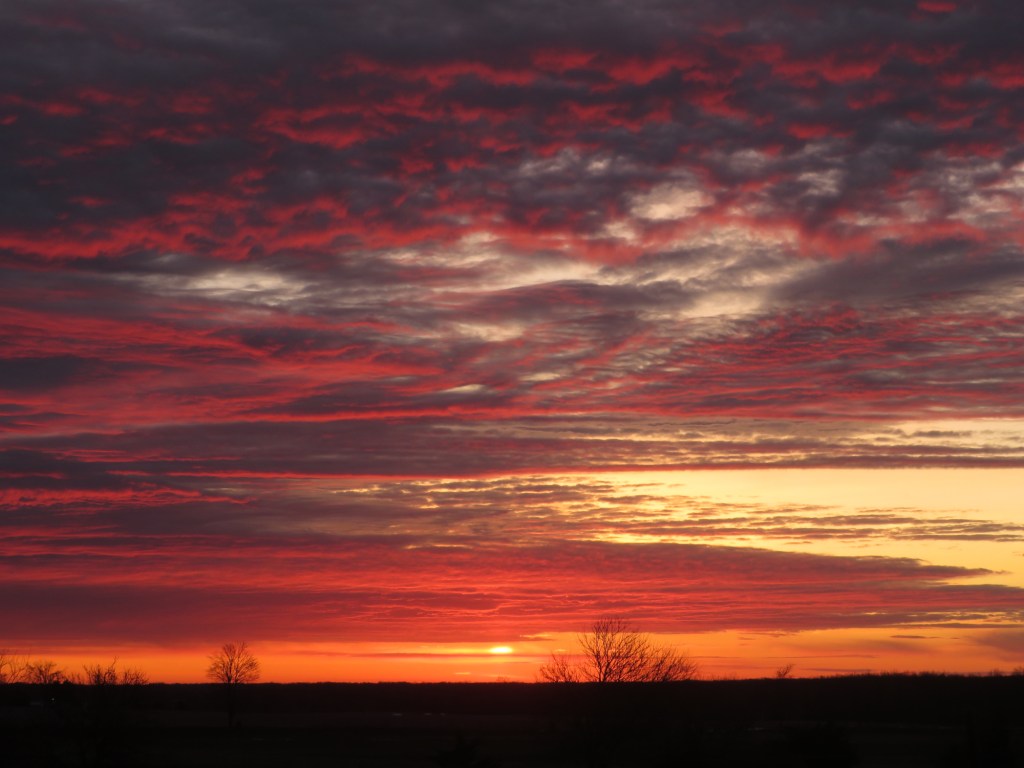
One thing I have learned by watching the sunrise is that the best color show is about 20 minutes before the sun appears. It all depends on the day, of course, because if it’s a cloudless dawn, a pink ribbon is the main sign. But if there are clouds, all kinds of unexpected beauty can happen.
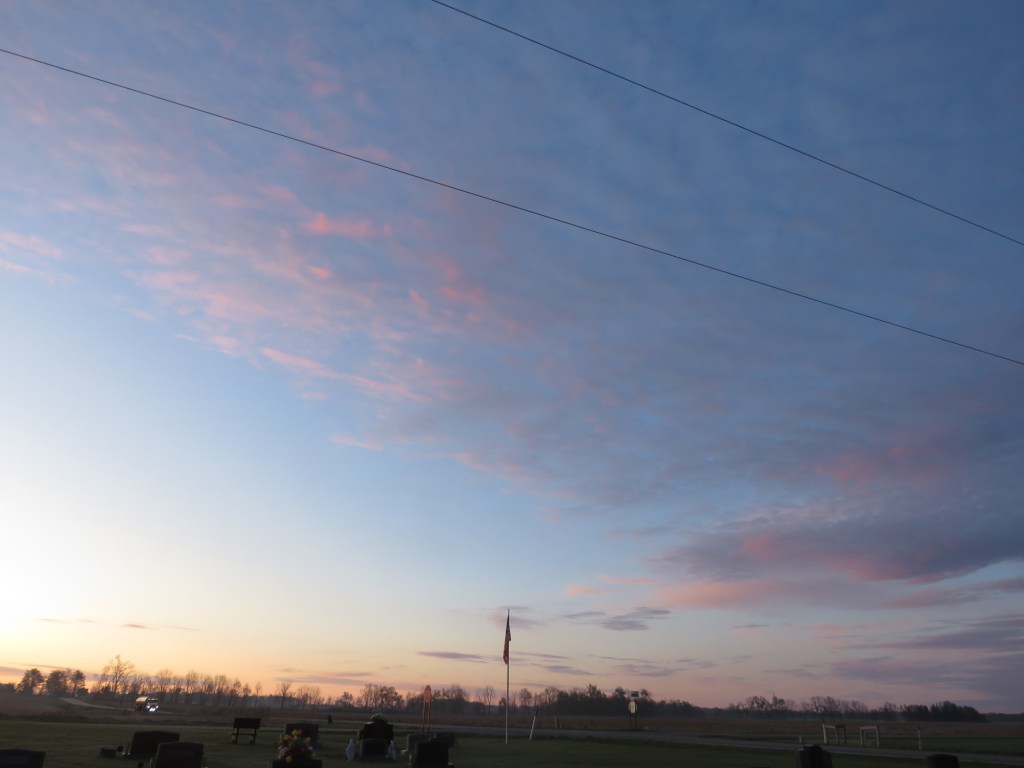
The color begins at the horizon and moves backward over the sky almost like a carpet being rolled out for the sun. The colors change as they move, and so the show is ever-changing until the sun arrives.
Here in Michigan, we have been covered by haze for the past week or so. The first hazy morning, I was really worried, because though the sky became light, I couldn’t see the sun at all until almost an hour after it rose. It was a weird feeling to see the light, but not be able to find even a lighter spot in the sky to indicate where the sun was. I actually gave up that first morning and went back inside.
On day two of the haze, I waited to see how the sun would appear, no matter how long it took. Finally, I noticed it hanging in the sky like a harvest moon.
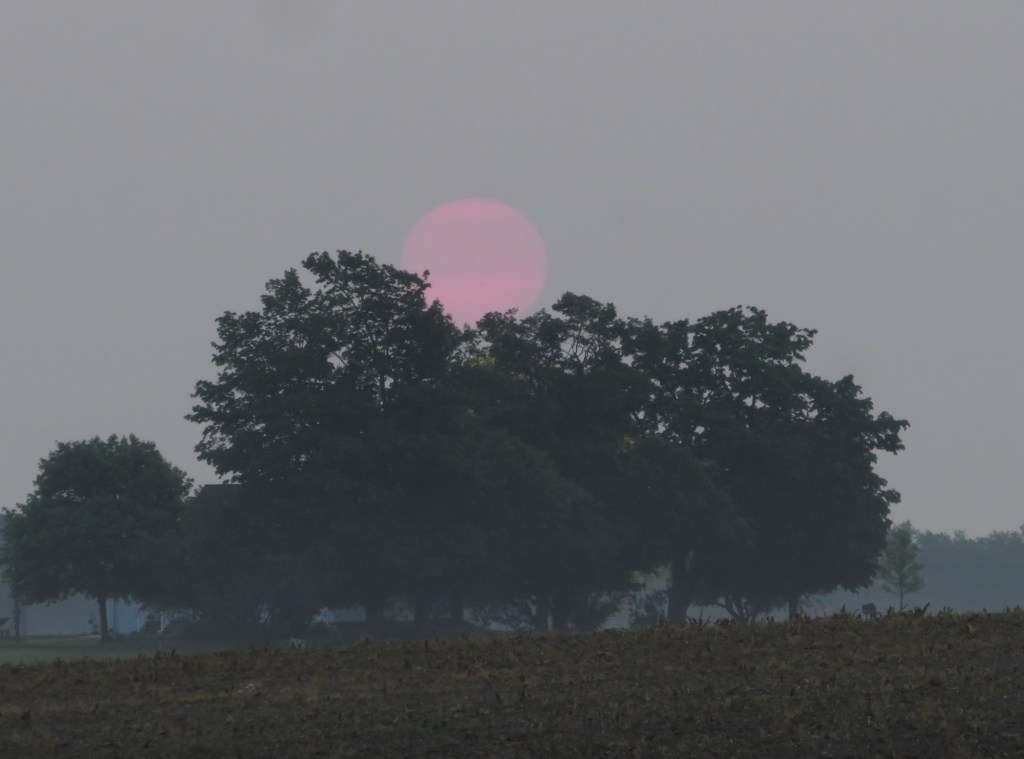
It was hard to believe that was the sun! As it got higher in the sky, it remained reddish, and the edges grew clearer as it rose. (You can see what the sun looked like much higher in the sky in the first picture at the top of this post.)
On a whim, I wondered what it would look like if I zoomed all the way in (50x is my limit). When I tried it, I was astounded to find dark spots on the sun.
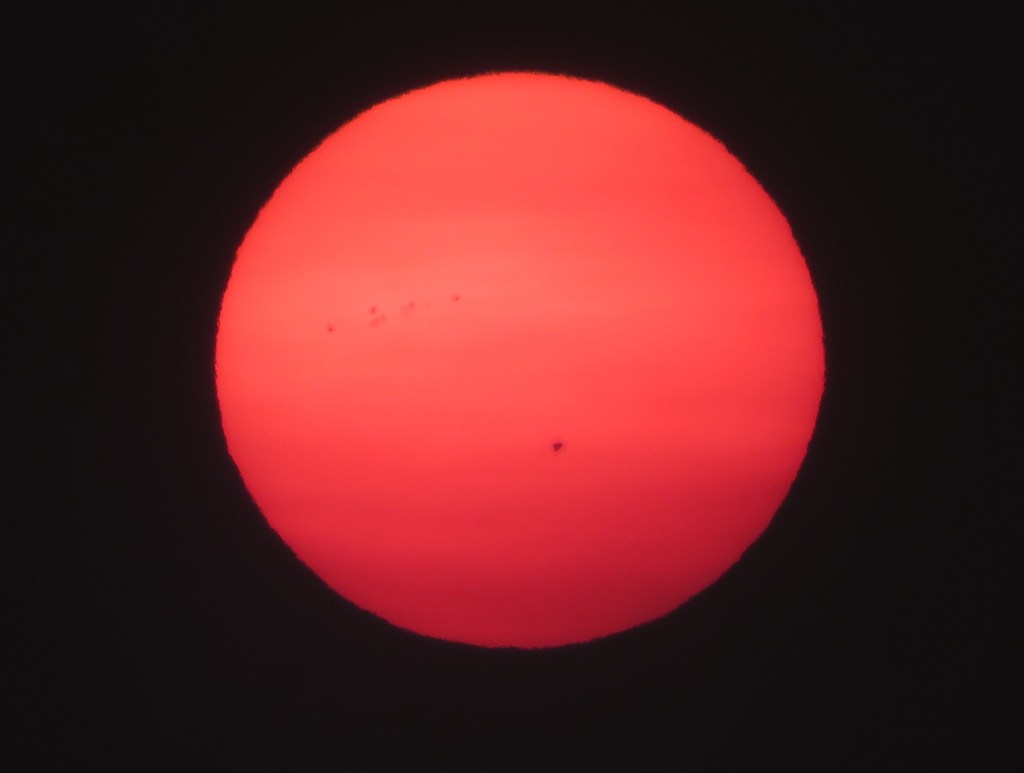
I took a quick look at www.spaceweather.com to see if it was what I thought it was, and sure enough, they had featured a picture of the sun that looked almost identical to mine. Those little dots across the top and the larger one near the middle were sunspots!
The next day I tried again, and the conditions were almost the same. Once again, I captured pictures of the sunspots, but this time they seemed a little less prominent.
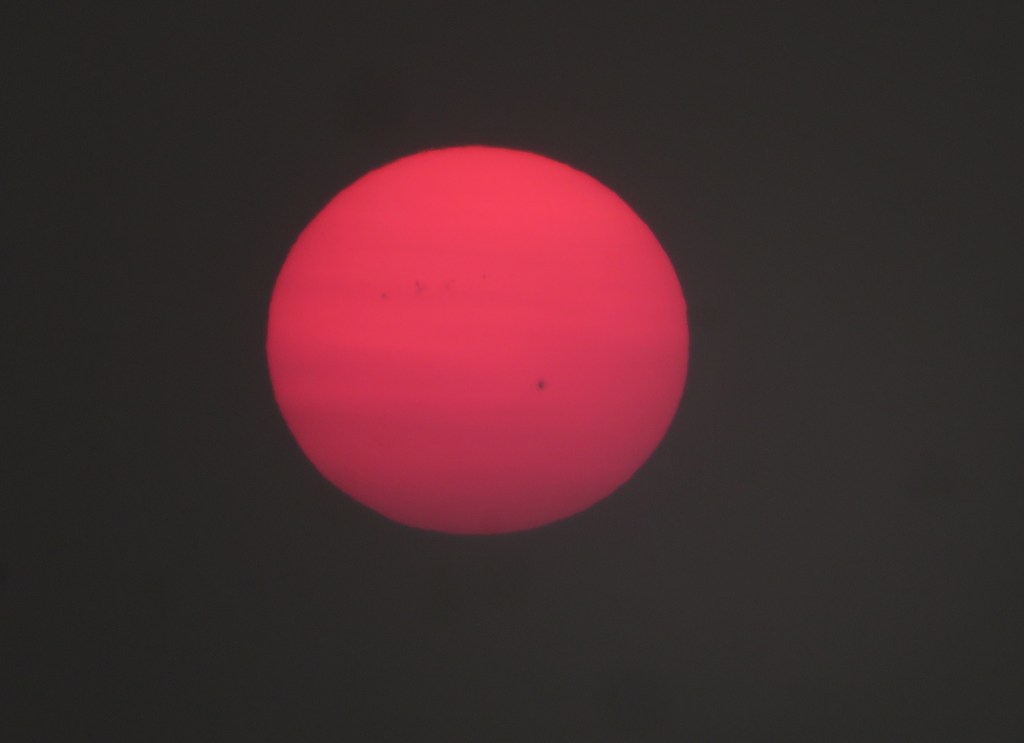
The unexpected benefit of the “dim” sun was that I could see the true surface because the brightness was muted. Instead of a glare, I was able to see the sunspots, like vulnerabilities or wounds on the surface of that glorious object.
That idea made me think about other kinds of glory, and how a filter can help us know the truth about what is under all that shine. Stardom can be a kind brightness that hides the vulnerability beneath; personal charm can do the same. I look at famous people, and see the kinds of things they get away with, and I have to wonder if it’s because their “glory” hides their flaws. If regular folks like you or I behaved that way, we would certainly face the consequences.
Maybe we need to apply a filter to the “bright spots” in our culture so that we can see them in perspective. History is a pretty good filter; we can look into the past and see similar behavior (because there is nothing new under the sun!), and witness how things turned out.
Another kind of “filter” is to place that same behavior (using our imagination) in a different circumstance. This is kind of like testing to see if something is really white by holding it up to something you KNOW is white (or any other color–you get the idea.) Sometimes context (or the lack of context) affects our ability to see the truth.
This video is an excellent example of how our perception about something can change based on the context:
Our senses are so easily fooled! It’s super important (and humbling) to finally accept that we are APT be fooled. Or, to look at it in a positive light, we were designed to be believers. We were created to be filled with wonder.
And I’m finding that spending time outside, first thing in the morning, just watching the skies and listening (the cows are mooing while they wait to be milked, and sometimes I can hear the sheep bleating to be let out) is really good for me. I am able to think while I watch, and I have time to make connections. The writer in me is doing cartwheels!
If you want to try it some morning, visit http://www.timeanddate.com to find the exact time the sun becomes visible in your area.
In the meantime, I plan to continue to get up before the dawn to record what happens, and occasionally be filled with wonder!
 The Fullers Four