I have been thinking about hope this week, because a few days ago, I met a friend who was losing it.
Losing hope. Maybe it doesn’t sound that serious, but hope, or desire, is the thing that keeps us going. Without hope, we will never try something new; we will never ask for help, have faith, or do just about anything. Losing hope means rolling out the red carpet for despair. It means giving up.
When we become aware that we are losing hope, we tend to call out to God for help. That is the normal reaction to extreme emergencies. Sometimes that extreme emergency ends, and the call to God is forgotten, but it shouldn’t be. We call on God because He is the ultimate. Because, when all else fails, the things we tried to replace God with won’t step in and help us.
Evolution won’t save us. It throws a suffering person under the bus with the whole “survival of the fittest” idea. Drugs may make us feel better in the short term, but substance abuse only complicates and prolongs things. In the end, addictions may be the thing that ends us. We can’t call on ourselves; after all, that’s how we got into this mess. Who can you call when every friend has deserted you and everything that can go wrong has gone wrong, and you are at the end of your rope? Only one fits the bill: God.
We know instinctively that He is watching us, listening for our sincere call for help when we finally reach the end of ourselves. We understand that he is the only one with enough power to take charge. We call on God because we want the problem fixed. We want the monsters to be dead. We want the pain to end. We want to be loved and accepted, and the only one who can accomplish all those things is the one true God.
Bonus: God is the source of our hope. When we call out to him, our hope is restored. Jeremiah 17:7 says “Blessed is the man who trusts in the Lord, and has made the Lord his hope and confidence. He is like a tree planted along the riverbank, with its roots reaching deep into the water–a tree not bothered by heat nor worried by long months of drought. Its leaves stay green and it goes right on producing its luscious fruit.” (The Living Bible)
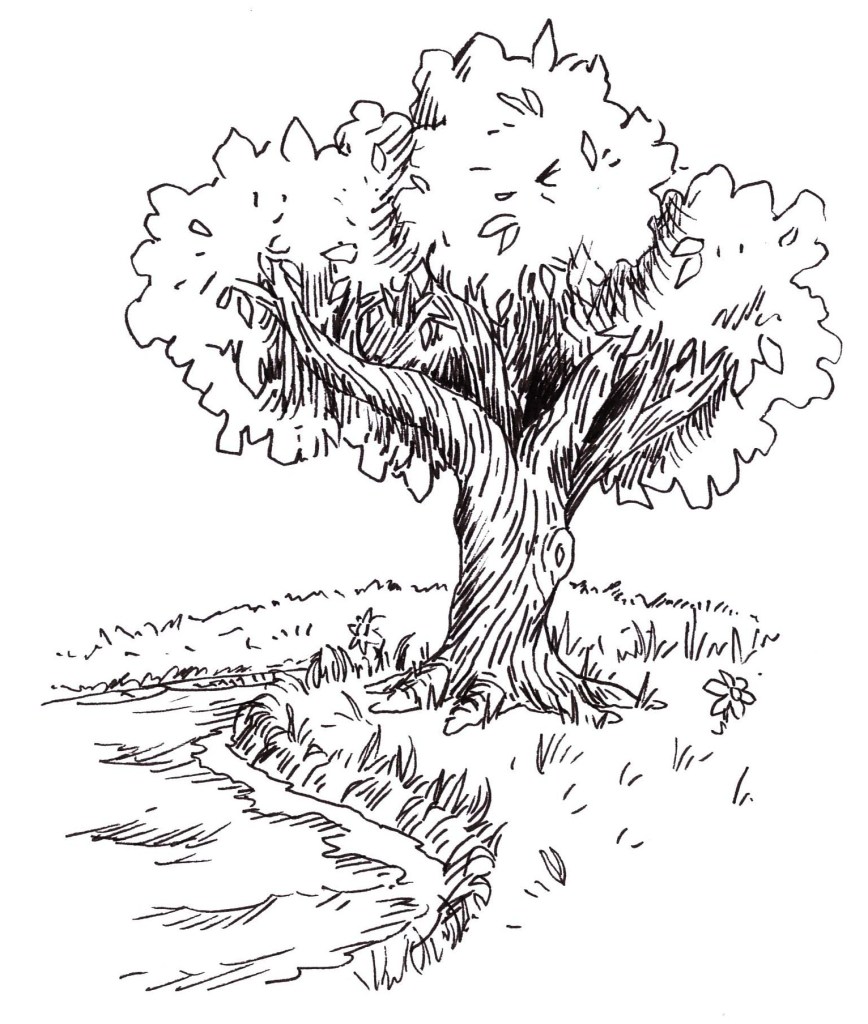
The man is compared to a tree that is not bothered by long months of drought–why? His roots are watered by another source–the river. Because its roots are deep in the ground, and connected to the river, the tree remains green even during times of drought.
A person who has made the Lord his hope may not seem different from the outside, but when times are terrible, he continues to hope; and so he looks different from the ones who draw strength from their circumstances. Everything may be crumbling around him; he may lose his income, and he may not even know where his next meal is coming from, but since his hope is in God, he has infinite resources available. All he has to do is to trust his loving Father in heaven, and his needs will be met.
It’s too easy, right?
Hold up.
The trust part can be difficult. It’s one thing to say you trust God, but he expects you to actually take action on that trust. We call that “faith.” On the other hand, if you still want to work the angles to meet your own needs, well then, you are on your own.
The Lord will never force himself on us. He is the Most High God, and unless we let that sink in with all of its implications, we will not be able to trust him. If we don’t fully understand who He is, and if we don’t understand that our relationship to him is utterly dependent upon the fact that He loves us, then we will never be able to trust him.
So who is he?
I’ll tell you the little I do understand: He is the cosmic God who made the entire world, including the sun, the moon, and the stars; the physicist God who holds it all together in real time, maintaining us in physical form rather than pure energy; the artist God who designed the passion flower and every sunrise and sunset; the biochemical engineer God who designed the form and function of your inner ear and your heart; the empathetic God who made himself small enough to come to earth in the form of a man and submitted himself to the judgment of corrupt men who put him to death; the all-powerful God who rose from the dead in order to save you, so you could love him back; the eternal God who not only holds the past, the present and the future in his hands, but also holds time, itself–that is a tiny piece of understanding God. Oh yes, and he is a consuming fire.

The fact that we have trouble with trust shows that we just don’t understand the situation. Besides, if hope is essential for life, and the source of hope is God, then it just makes sense to trust him.
The proverb says, “Hope deferred maketh the heart sick, but when desire cometh, it is a tree of life.” (Proverbs 13:12) I used to think this proverb was talking about disappointed hopes, but I’m wondering if I misunderstood. The word “deferred” isn’t used very much anymore, except in banking, to describe “putting off” payments until a later date, when one has more funds available. (College loan payments may be “deferred” for six months if the borrower has trouble finding a job, for example.) The payments will still be there, and the interest will continue to accrue, of course, so this isn’t talking about hope being destroyed or anything. But it suggests that hope is “put off.”
Have you ever “put off” hope, or held it at arms-length? Why would we deprive ourselves of hope? After all, hope is “the thing with feathers–/that perches in the soul–/And sings the tune without the words–/and never stops-at all”” says Emily Dickenson. She goes on to say that hope has never “asked a crumb of me.” But is that true?

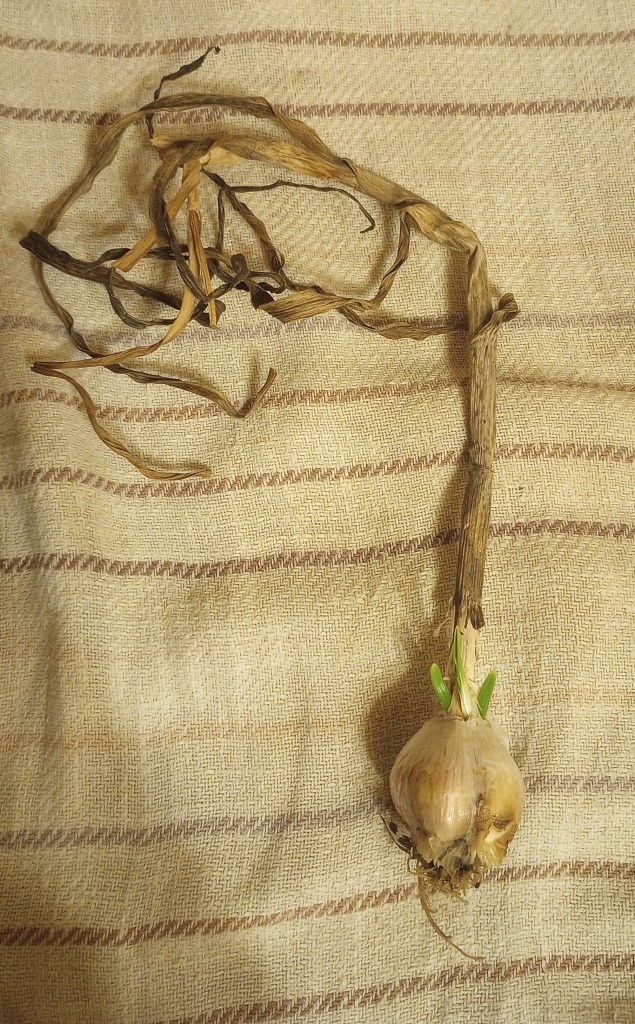
Photo credit: hedera.baltica
What does hope cost us? My knee-jerk response before I really thought about this would have been to say hope has the potential to cost us significant disappointment. And yes, when our hope is disappointed, it hurts. But the true comparison isn’t between hurt and not-hurt. The comparison is between hope (desire–regardless of outcome) and zero hope (desire).
We have a book, Fables, by Arnold Lobel, the same writer who penned the beloved “Frog and Toad” series. In it was the story of a lovesick ostrich who was too afraid to tell his lady-love the truth. He spent his days writing her love poems, which he never sent; and thinking up songs about her that he was too shy to sing. Finally, he got the nerve to write her a letter declaring his love, but in the end, decided not to give it to her. The moral of the story was “Sometimes, love is its own reward.”
I didn’t like that story, mostly because I felt like the ostrich was a coward (Come on! Kiss the girl!), but the bumpy ending got my attention, and stuck with me, and I have thought about it ever since. It is so very true, and I have found it at work in my own life. Even when someone we love deeply does not love us back, there is comfort in being able to just love them from afar. We can look up at the stars and wonder if they are looking up at the same stars, and we can send a silent “I love you” out into the night, without knowing if they will hear it or not, but feeling wonderful just the same.
This is the fruit of desire (hope): To love. Being loved back is nice, too, but we receive joy in the simple act of loving others, even anonymously. Have you ever given someone a gift, but not revealed that it was from you? It is thrilling, especially if you can see their reaction, to know that you have blessed someone and they had no idea who did it. They may have no alternative but to praise God for it, and how amazing would that be? You give a simple gift, and it becomes praise to our Father!
We once had our car in for an expensive repair. The shop had agreed to let us make payments over time, and in return, we allowed them to work on it when they could fit it in, so it was in the shop for many weeks. One day, my husband stopped by to find out what the remaining balance was, and the owner handed him a receipt that said “Paid in full.” Jim was dumbfounded.
“Who did this?” he asked. The owner shrugged his shoulders and looked mystified.
“I have no idea.” he said. “I hoped you would know. I was alone here working late, when I heard the bell at the desk. I went in, and saw a man standing there, wearing a helmet and sunglasses. I asked if I could help him, and he said he was there on your behalf.”
“He asked what the balance was on your bill,” the owner continued. “I told him the amount, and he pulled out an envelope and paid me in cash. I turned around to put the money away and write the receipt, and I heard a voice say, ‘Give it to Jim.’ When I turned back around, he was gone. I ran out to the parking lot to see what kind of car the man drove, but the lot was empty. And I couldn’t even hear an engine running, in the distance. The guy just disappeared.”
Jim questioned him closely, but his friend had nothing else to offer except, “I figured you must have known the guy. I had never seen him before in my life.” And so we had no alternative except to praise God! We hear a lot about the perils of unrequited love, but we don’t hear much about unrequited giving!
It is humbling to receive gifts that you can never repay. But when you are truly in need, and those gifts sustain you, what can you do besides be grateful to the giver and thankful to God? Well, you can resolve to “pay it forward.” Later on in life, if a time comes when we have plenty and see a need in the life of someone else, then it will be our turn to help.
To review: Desire (hope) is a tree of life. The fruit of desire is to love (and maybe to be loved back). The average response to being loved is a rush of gratefulness, possibly humility, and a kindled desire to give back if possible; and if that’s not possible, a desire to give to someone else–even if it is a stranger. Hope begets joy, invention, mystery, faith, imagination and in short, everything worth living for!
But consider the life we would have if we never dared to hope. How many love songs are written without hope? How many plays? Poems? How many buildings are built without hope? How many weddings would there be without hope? How many new businesses, or inventions would there be without hope?
Years ago, I read a book called “The Audacity of Hope.” I remembered the title today, and it still rankles me. When something is “audacious,” meaning “unrestrained by propriety” or “presumptuously wicked” or “outrageously out-of-place,” (the last definition is my own paraphrase) then it means that someone has had the audacity to declare that hope is inappropriate! Under what circumstances would hope be presumptuous? Upon whom would it presume? Would hope be out-of-place when someone is in desperate straights, and they can’t imagine a way out? Nope! There is no better time for hope than that!
What human on the face of this planet has the right to say hope–for anyone else–is out-of-place? Hope is always appropriate, for without hope, we die. And yet, our culture has become a culture of death. We love to make fun of people who have hope, and portray them as “immature” or naive.
In a way, it is childish to hope, despite having suffered disappointment, but that isn’t a bad thing. Children will always hope, and they will uncritically believe what they are told. They are not jaded. God does not expect us to check our brains at the door, but he does expect us to check our attitude. He expects us to remember who he is when we come to him.

And he tells us to come to him as a child, (willing to be taught, full of wonder, enthusiastic and trusting) or we won’t be accepted. (Luke 18:17) He is good beyond what we can imagine, and he loves us more deeply than we can understand; after all, he was tortured to death for our sakes, then rose from the dead to save us. He is more powerful than anything we can imagine, yet is as gentle as a whisper in our minds. Coming to him as a child feels presumptuous, but his love allows it. People who saw him in the past fell flat on their faces. (Revelations 1:17)
God is invisible to us now, but evidence of God is everywhere, especially in the natural world. Come to the search with an open mind, and ask him to show himself to you. Read the bible to understand more about him. The gospels (Matthew, Mark, Luke and John) tell the life of Jesus by those who knew him, but the book of Job (written thousands of years earlier) has amazing declarations of who God is in the last few chapters. God’s fingerprints are all over this earth, revealing him. Just ask him to show you.
He deserves all of our praise, and one day, we will praise him whether we expect to or not. He will come in all of his glory, and every knee will bow and every tongue will confess that Jesus Christ is LORD. We will be helpless to do anything else, once we see him in his fullness. But what he wants of us is to believe in him now, while we still have the ability to reject him.
He wants us to seek him, and promises that we will find him, if we seek him with our whole heart. He is like the billionaire who seeks a truly loving wife. He hides his wealth and comes to her as a poor man; he woos her with little things, poetry and wildflowers, and when he is sure of her love, then he reveals it all on their wedding day.
Jesus is the bridegroom,and he calls us (his followers, the world-wide church) his bride. The wedding day is coming, and he is calling us to come to him while there is time. And the first thing he gives us when we come to him is hope.
Desire, when it cometh, is a tree of life.
 The Fullers Four
.jpg)