This last Sunday, our family enjoyed a walk around the park. It was a beautiful day, partly cloudy and perfect temperature. There were a few others enjoying the day, but the park wasn’t overly crowded, and most of the time we were alone on the path.
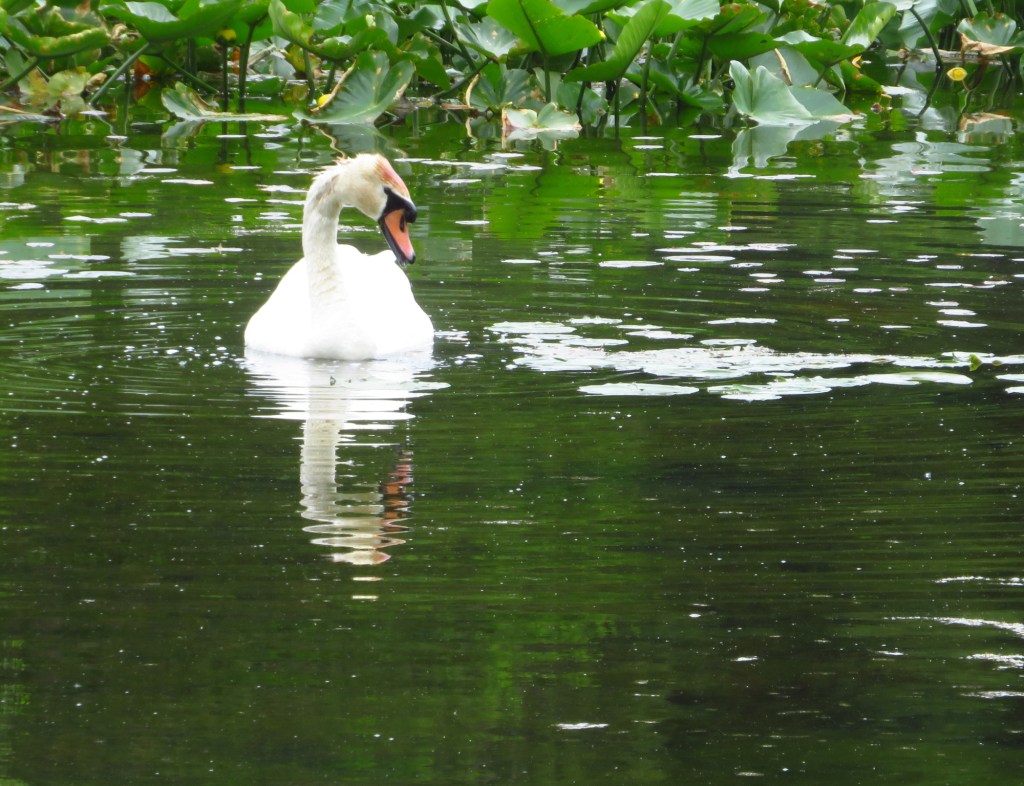
The lakes were filled with lilies, and it was wonderful to see all the fresh flowers opening. The lily pads provided resting spaces for the dragonflies, and the fish kept bumping up against the surface of the water. I kept thinking of the line from Horton Hears a Who: “We are here! We are here!”

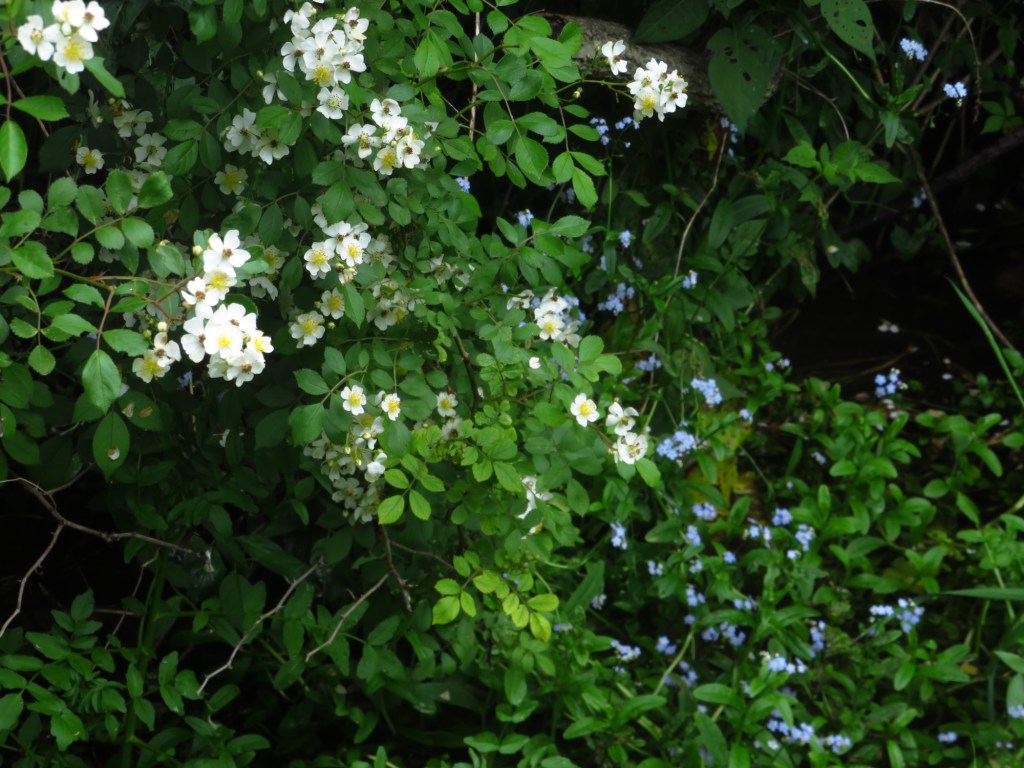
Late spring is the best! The flowers are open everywhere, and we kept stopping to ask, “What is that wonderful smell?” Dogwood and wild rose were blooming, and all along the stream, forget-me-not’s crowded the bank.
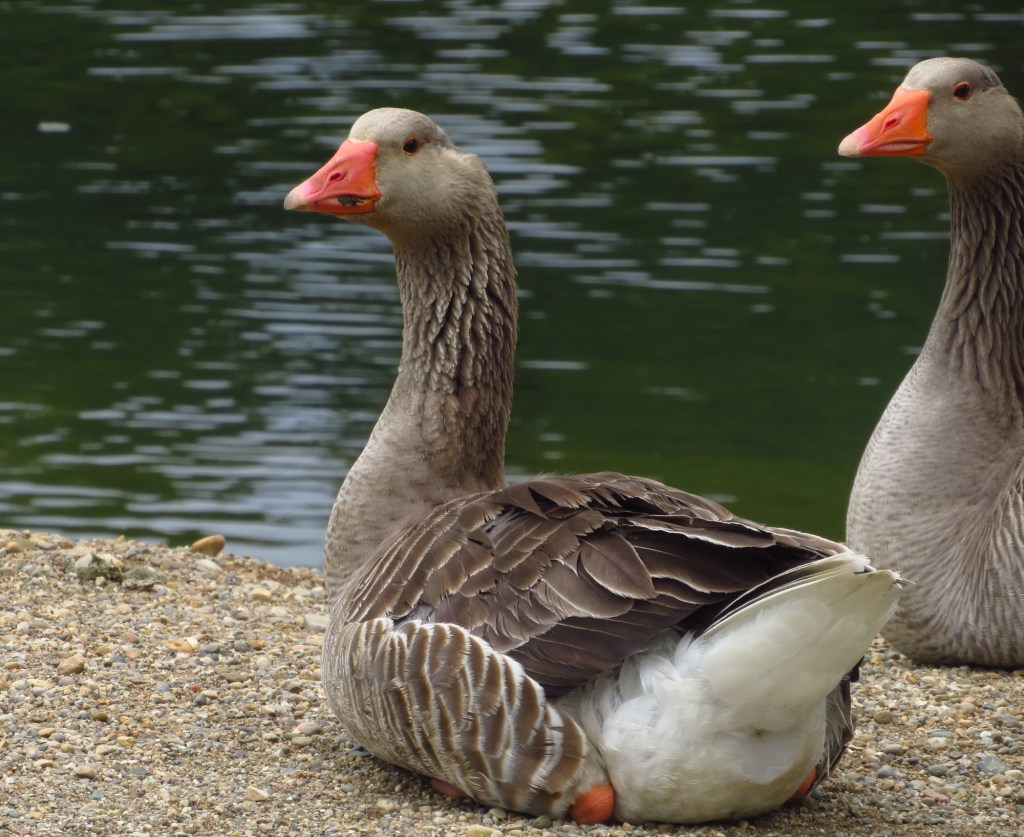
On our way back to the truck, Jim pointed out the group he likes to call “Park Security.” There is a mixed group of Graylag geese and common geese that stay year-round and are usually gathered together near the road. The one is a mixed breed, notable for its unusual feathers. Another regular member of Park Security has a broken wing, and it has been that way for years–it makes him look tough.
At this time of year, the group are raising a brood together. A couple will watch the babies, and the others will watch everyone else. If one happens to get too close to the little ones, the security guards will actively hiss and charge. We don’t seem to bother them too much, but Mr. Darcy makes them nervous.
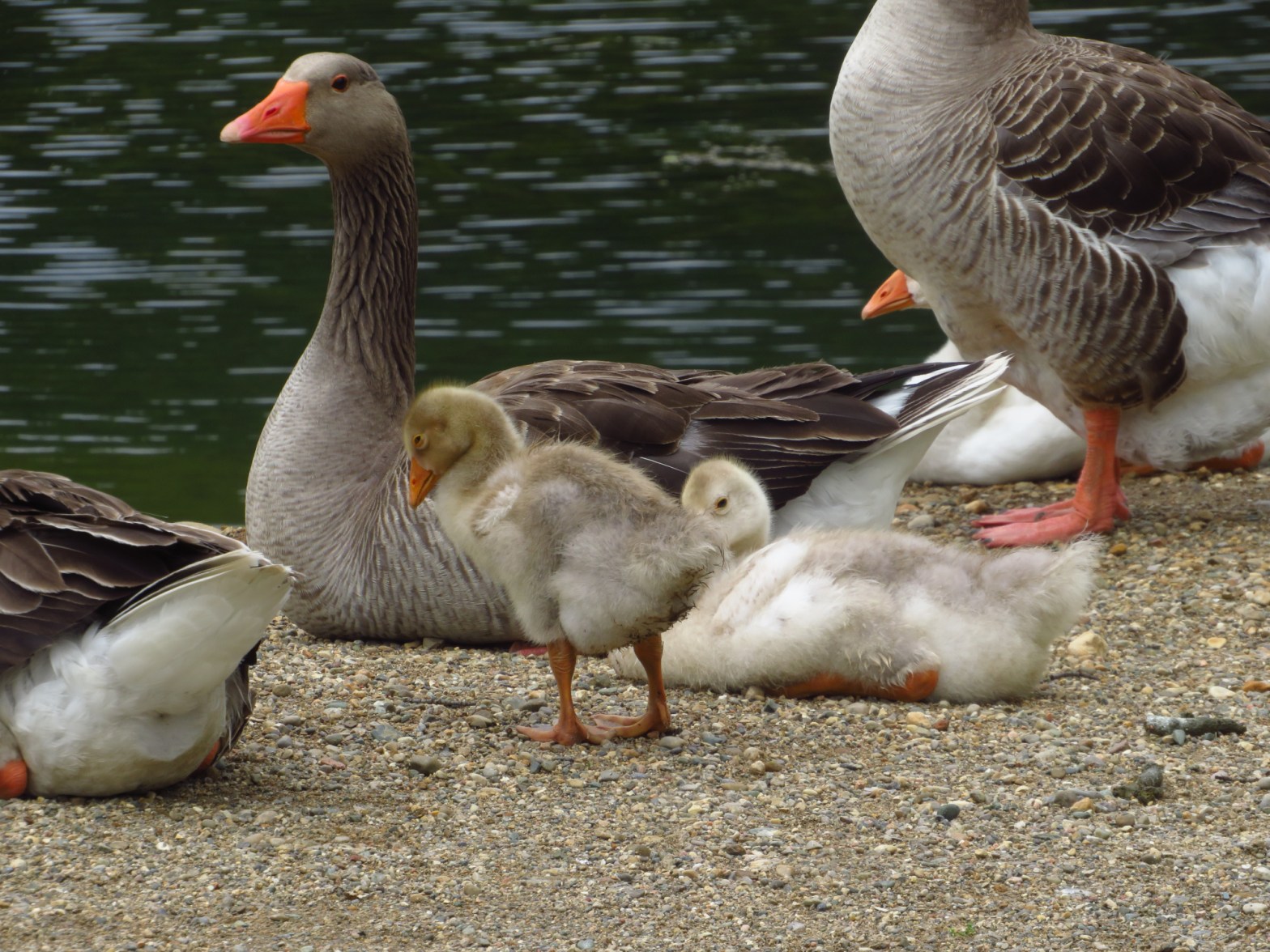
On our way passing by, we noticed a little goose that seemed to be having a hard time walking. He was quite a bit smaller than the others, and remained cuddled next to his mother even as we passed by them.

All the geese got up to move except for the little one, and he stumbled a little and then got moving. The adult geese saw he had been left behind, and kept an eye on him and us.
The little one made it over to the rest of them, and just stood there, seemingly exhausted. I was concerned because I had the idea that if he showed weakness or illness, they might turn on him. But instead, the adult geese circled around him and stood between him and us. I don’t know if he is going to make it, but he will have a much better chance with protection.
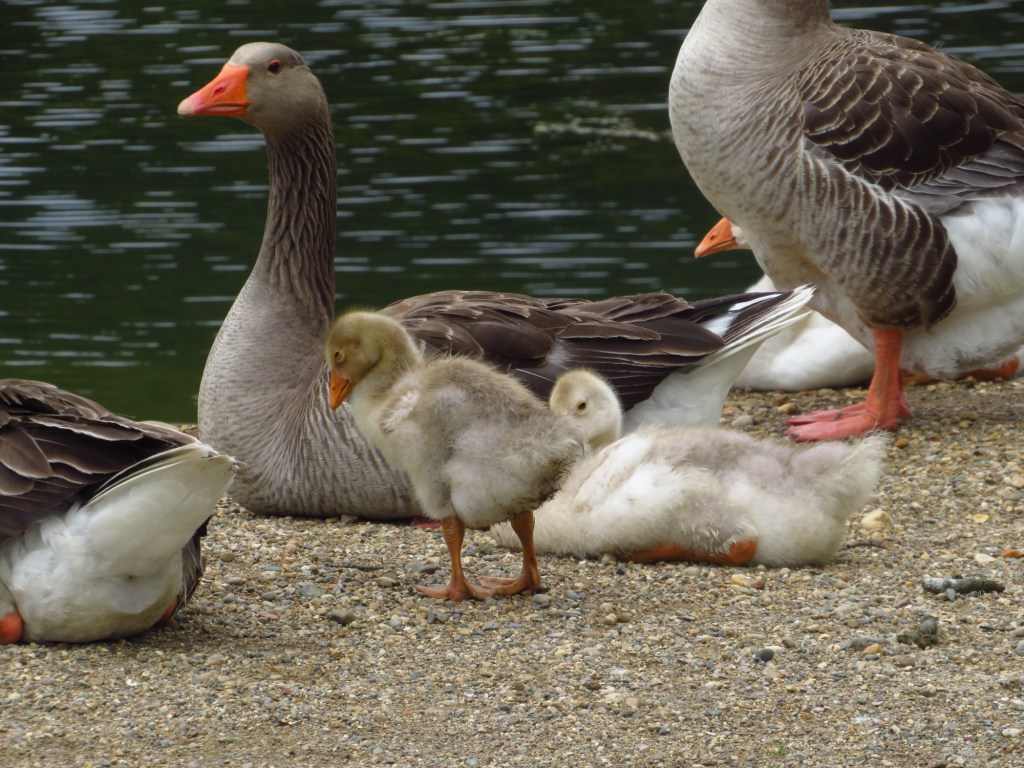
And as expected, Mr Darcy got a hiss or two, but he just took it in stride.

On the way home, I got thinking about the concept of “survival of the fittest.” As a child, I was taught that things have to be strong on their own or they will never make it in life. The implication, of course, is that there is no help coming, or that you couldn’t count on any help. I picked up that my compassionate impulses were cute, and therefore, “immature.”
But if kindness equals immaturity, then does it follow that selfishness equals maturity? Why then do we teach kindergartners to “learn to share,” and to develop self-control? Aren’t they already fully mature if they grab all the crayons for themselves?
I believe our culture has been suffering a clash of ideals, and while Darwin brought us selfishness as a by-product, it is not a sustainable system. If each person fights for themselves only, then everyone is the enemy, and there is no rest. But if each person cares for others the way they care for themselves, then we will be at peace. It’s really that simple. If I am being well cared for, what on earth is there to fight over? To the contrary, I feel a debt of gratitude, and a desire to “pay it forward.”
As I look around, I see many examples of sacrificial giving and protection of the weak in human interactions, in animals, and even in plants.
For instance, when we walk as a group, we only go as fast as the slowest walker can comfortably go. We pause when someone wants to look at something, and we stay together. Each one of us has different objectives: Tony wants to examine every new plant he finds. I love to look at (and smell!) the flowers. Beau wants a picture of every plane that flies overhead, and Jim is just happy to be outside instead of working! Sometimes we adjust our walk for Mr. Darcy, and lift him in and out of the truck. After all, he is the equivalent of a person in their nineties!
But each one of us puts our own desires aside sometimes in the interest of staying together. Or maybe you could say that we each take an interest in each other’s concerns, because the more time we spend together, the more each one of us learns about and grows to like the plants, flowers, airplanes and etc.
People often help each other. My friend uses bottle deposit money to print out certificates of appreciation for our military veterans. She was telling me yesterday that random folks she hasn’t met will leave her their bottle deposit. Some of the doners know about her project, and some don’t.
Aldi shoppers often find that the cart they pull from the line already has a quarter in the slot. Back when my mom was alive, people used to pay for my parent’s meal at the fast food drive thru. I heard another person say that they like to leave dollar bills inside the covers of Gideon Bibles. I could go on and on. The one thing all these cases have in common is that the do-gooder got no benefit from their action, except for the knowledge that they helped someone else.
Animals help each other. Mothers go through all kinds of struggles to make sure their babies are protected and have enough to eat. Have you watched a mother Robin care for her fledgling? She will painstakingly teach him how to fly and then continue to feed him long after he can get around himself.
We are told that snakes, for example, do not mother their children. But my dad remembers as a boy on the farm finding a garter snake mother winding her way through the grass with a train of little fingerling babies following after! (How I wish I had a picture of that one!)
I have seen many videos where an animal from one species will leap to the defense of another animal when it is under attack. One that really amazed me is of a lioness protecting a baby chimpanzee! But there are also lots videos of the family dog snuggling with the family bird, or the cat helping the dog escape from his crate, or all kinds of crazy stuff.
We even see this happen with plant life! A German scientist named Suzanne Simard has discovered that trees not only communicate with each other, but they share resources like minerals and sugars in the wake of catastrophic forest fire or insect infestation. They do this using the network of fungi filaments that fill all soil everywhere, a network called the mycelium. Suzanne’s TED Talk is fascinating!
So trees and other plants support each other’s life, using a third life form as a mode of communication or transportation. Hmmm. This is sounding less and less like “survival of the fittest,” and more and more like “survival of the loved.”
Love is what makes life worth living. Being loved and accepted is important, but we are just as driven to complete the circle and show love to others. What drives us? It is written in our DNA, along with the signature of our Creator. God is love.
And though we retain the impulse to love and need to be loved, our nature has fallen into rebellion against God. When we trust Jesus with our lives, he gives us a “heart transplant,” and we are renewed from within. He empowers us to feel love for others and to follow through on those loving instincts. He calls it being “born again.” He is making all things new!
As stewards of this earth, which is the job God originally gave to Adam, we are responsible to care for it, to guard those who need guarding, and to protect and nurture all aspects of nature that are in our care. And we feel God’s approval in our hearts when we take care of someone or something that needs help, don’t we?
Each one of us has something that we can do to help make things right. But the first step is to see the need, and the next step is to meet it. Yesterday I watched Tony rescue a small fly that was drowning in a water bucket. It only took him one second to rescue it, but think of what Tony did: He contributed to life on the earth. That little fly would have died but for his action. He was that fly’s hero.
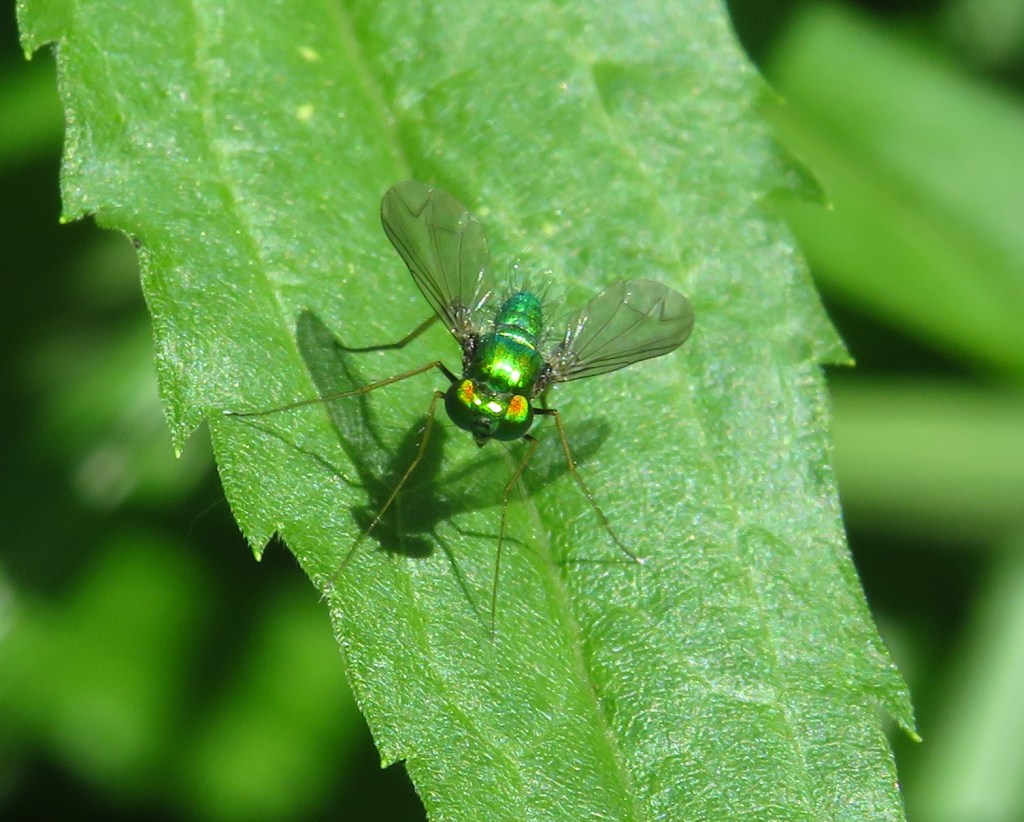
There are lots of rescues going on all around you every day. Do you see someone smile and say “That’s OK,” instead of screaming that they are going to sue? That’s one form of a rescue. That’s grace. That’s love. That’s what makes the world go around.
Love is a plate of homemade cookies for the mailman, or a grateful wave to the policeman. Others serve us every day: The clerk at the bank, your Sunday School teacher, your nurse. Do you see them? Everywhere around you, people are giving little bits of their time, which is their life, in order to serve you. In fact, no matter what the specifics, we are ALL called to service.
Whom do you serve? Is it possible that you, like Tony, could in a small way be someone’s hero? Maybe you are called to minister to the poor, or to the sick, or even to those in prison. You don’t have to do anything extraordinary; just look around and see the need. And if you can, fill it. Maybe you are in great financial need right now; you can still pray for others, talk with others, and find non-financial ways to help. Yes, even you could be someone’s hero!
Jesus, who is God incarnate, was a servant who washed His disciples’ feet and spent His life teaching and curing disease. And he was homeless. He showed us the way to love others by His example. When we follow in his steps, we don’t just survive, we get to live.
“A new commandment I give to you, that you love one another: just as I have loved you, you also are to love one another. By this all people will know that you are my disciples, if you have love for one another.” John 13:34-35
I came that they may have life, and have it abundantly. John 10:10b
 The Fullers Four