Yesterday was dry and cloudy, with rain to follow the next couple of days. So yesterday we worked outside, and today I am inside, writing. While Tony was planting the rest of the tomatoes that we had started from seed, Beau and I worked to plant peppers.
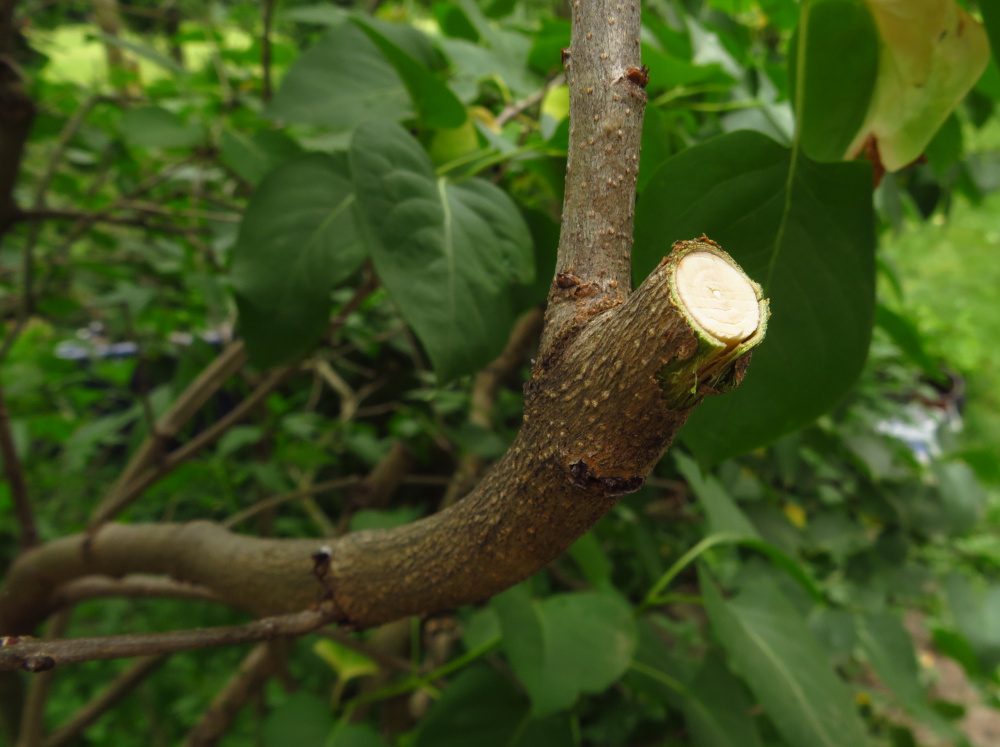
As it always happens, I began to notice other things that needed to be done “while we were out there,” and so while Beau was preparing the garden, I began to prune the lilac bush.
Well, how could I not notice the lilac bush? It had grown so huge that I could no longer see out the window! Lilacs tend to be slow growers, and the last time I pruned our bush, I hacked it so badly that it didn’t bloom for a couple years.
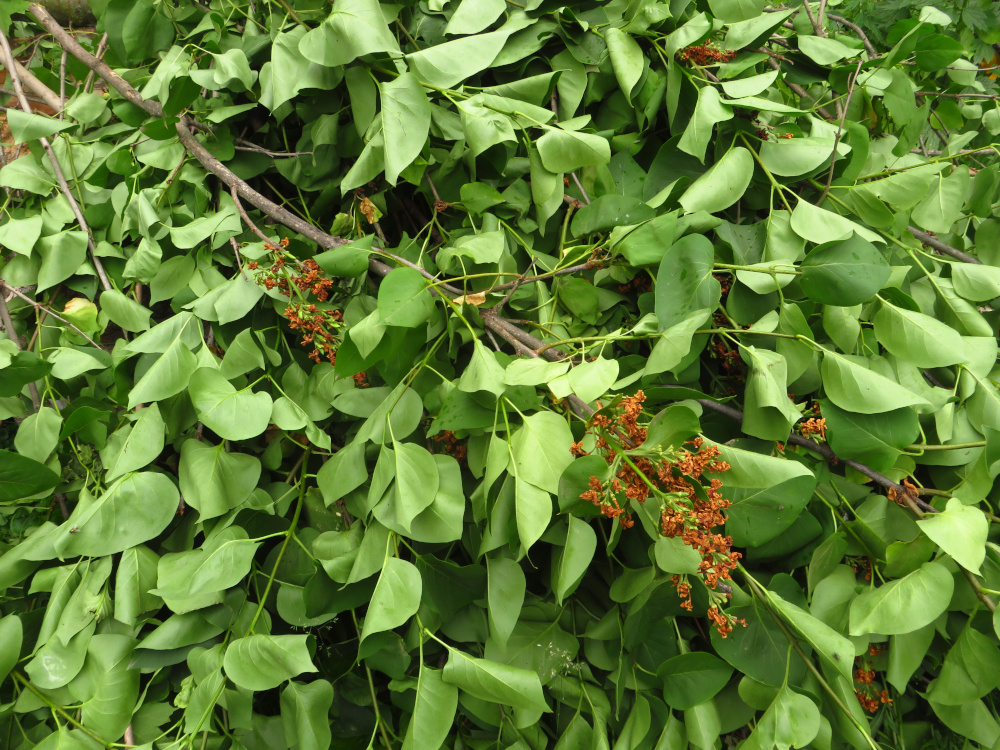
So, this time, I was being careful as I approached the lilacs. Beau and I discussed it; he, being on the ground, could see the whole bush. And I was standing on the back steps so I would be tall enough to reach the branches (very tall!), but I couldn’t see anything. So we worked as a team to get the right shape. We wanted the bush to have a nice rounded look when it was done. And we didn’t want to hate how it looked for two years (like the last time I pruned them!)
Pruning is as much as an art as it is a science. The “science,” or the observable, repeatable principles that govern plant growth, are the tools we use. When pruning, we have to look at the whole plant, and notice the way it has developed. The plant will show you what it “wants” by the way it grows. This is the “art” part of pruning, and the gardener gets better at it with experience.
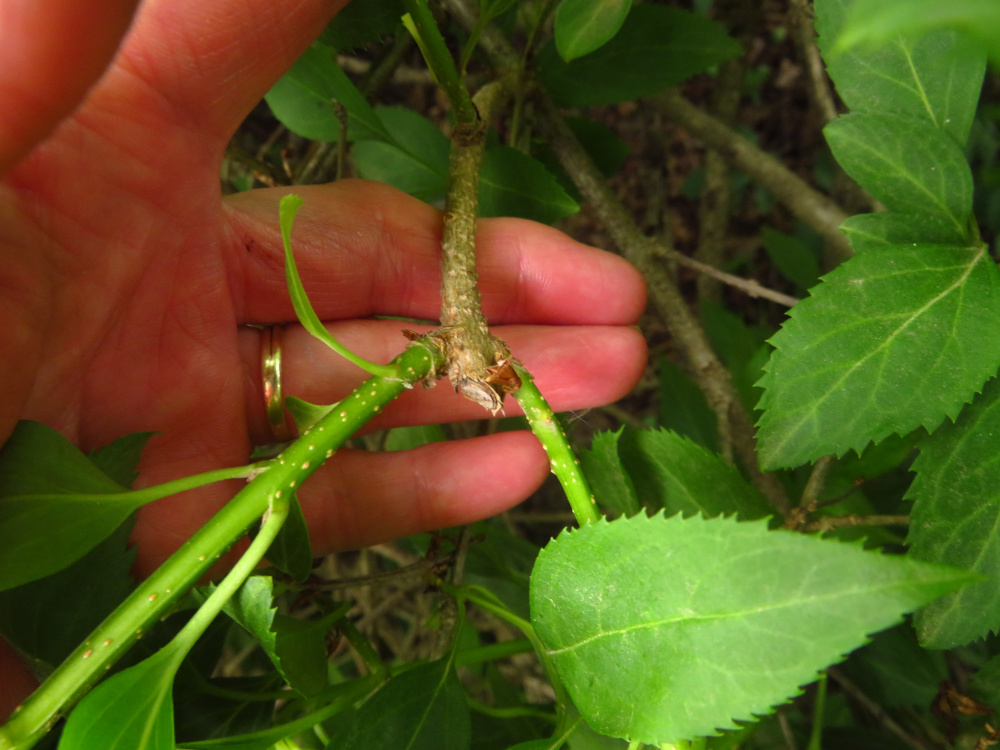
You can think of a plant’s natural growth habit as being self-centered. The plant, after all, wants to be comfortable. It wants to put some extra leaves out there to enrich its food supply, just in case. Plants tend to be programmed as “preppers!”
But as a gardener, we don’t want a tomato plant that lives forever. Our goal for the plant (producing fruit) differs from the plant’s goal (long-term survival.) So we must manage things to provide an environment that will support more fruit, whether that means pruning, water management or fertilizer application.
But what happens if you just leave the plant alone? Is there really any benefit to pruning? Well, this year, we tested that on our raspberry crop.
Our tendency in years past was to let everything just grow, assuming that lots of growth would lead to lots of fruit. But unmanaged growth caused the opposite to happen. The raspberry canes produced less each year, and eventually died out.
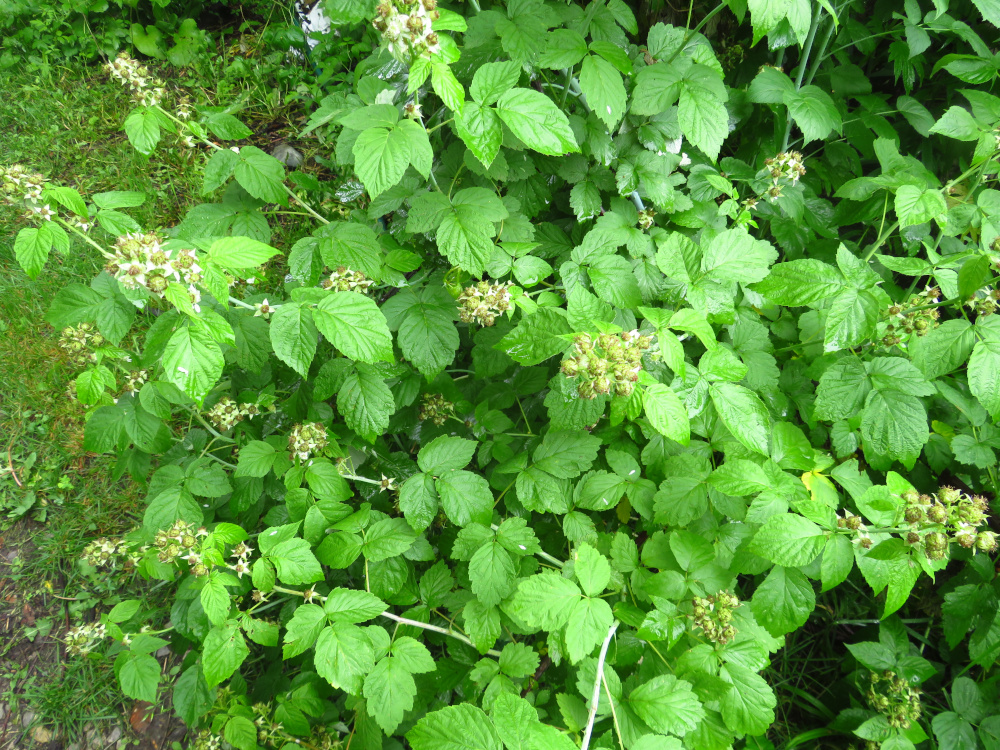
This year, we educated ourselves about how to do it, and then for the first time in late winter, we pruned our raspberries. As a control, we left one patch alone (the one above). We wanted to evaluate how much each method yielded.
At first, I was kind of worried when I saw how few canes were left in the pruned patch. I figured that they wouldn’t produce many berries at all, but now I’m not worried at all!
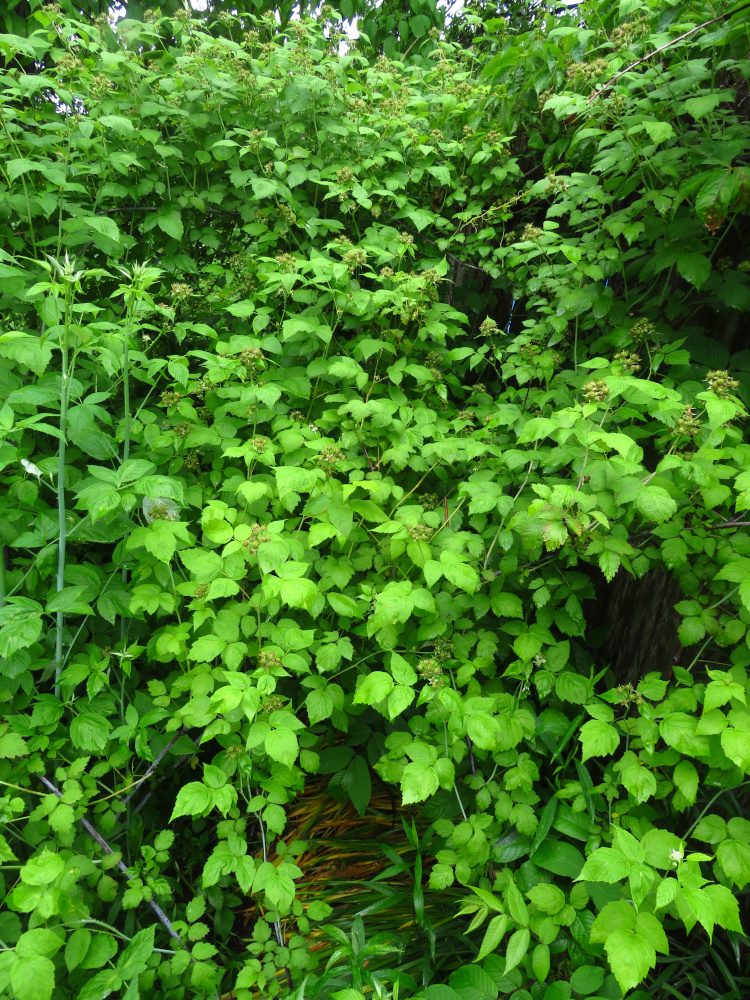
Pruning is a serious business, and as I mentioned before, if you do it wrong, it will definitely mess up the plant. But if you do it right, you will have MORE growth than before. A good prune will control the growth so that the energy of the plant is poured into producing more fruit.
I always thought of pruning as a way to make the plant smaller, more manageable. But it ain’t necessarily so. The key to remember is the way you prune manages the plant’s growth. If you want it to produce more fruit, there is a way to do that. If you want the plant to be more full, there’s a way to do that. If you want a long-stemmed, willowy look, there is yet another way to do that.
But it takes time. You have to first educate yourself so that you know what you are doing. Then you have to get to know the specific plant you are getting ready to prune so that your cuts bring more life instead of stunting it. You have to get the timing right. And then you have to do the pruning.
After we got the lilac done, I began thinking about how the Lord Jesus told his disciples that He was the vine, and they were the branches. We MUST stay connected to him the same way a branch has to remain connected to the vine in order to stay alive.
The Lord “prunes” us, too. He guards us from becoming too comfortable, because when we are comfortable, we don’t bear fruit. He sometimes takes things away that waste our time. He chastens us. But all of this is proof of His love for and commitment to us, for it helps us bear spiritual fruit.
Sometimes it hurts to be pruned. After all, we put a lot of energy into going in a certain direction; we have high hopes, and it hurts when our plan comes to nothing. But before too long, we usually see the wisdom in the pruning. God does, after all, know everything about us. He designed us, and created a plan for our lives to have meaning. He can hear our thoughts, and he knows the secret desires of our hearts. He sees exactly what we need right now, and He also knows what we will need in the future.
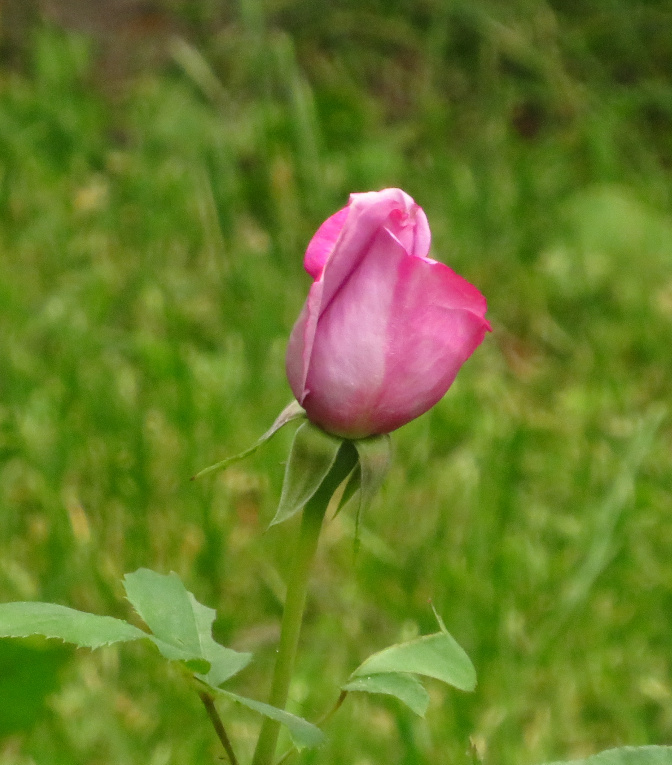
Pruning helps those flowers appear, and that makes all the difference.
We can trust his knowledge, which is so much more extensive than ours, but more than that, we can trust His goodness. The Apostle Paul tells us that our trials will develop patience, then experience, eventually bringing us hope (Romans 5:3-5). James also writes that the trials God allows in our lives will develop patience, and eventually make us whole and complete, lacking nothing. (James 1:2-4).
But if God chastens and disciplines those He loves, what does He do to the people who continually resist Him? God will not force anyone who doesn’t love him to be close to him. He will not push Himself on them. He desires our love and explains to us that we show Him our love by our obedience. But if someone is continually rebellious, He sadly leaves them alone to follow their own path.
Being left alone by God is a terrible thing. For only God has the power to free us from sin, which is what is killing us. Before we know Jesus, we may not be aware we are enslaved. When we are in sin, we actually want the things that poison our bodies and our minds, and we look at any attempt to free us from them as an attack.
That is the really terrible thing about sin; it deceives us into thinking it is desirable. Picture someone who is addicted to drugs, drinking or sex. They do not understand (or even care) that the thing they crave so much is killing them. And if you try to stop them from destroying themselves, they will hate you.
But if we push God away for long enough, and we continue to defile ourselves with the things that disgust Him, he will let us go.
“When you were slaves to sin, you were free from the control of righteousness. What benefit did you reap at that time from the things you are now ashamed of? Those things result in death! But now that you have been set free from sin and have become slaves of God, the benefit you reap leads to holiness, and the result is eternal life.” (Romans 6:20-22 NIV)
And just as the doctor gives a patient who has received a heart transplant recommendations and medication to help him get well, so God directs us into a new way of living after he has transformed our stony hearts into living ones. And we need His help for this, because how do we know what to do if we have never been taught the truth?
And if we obey him, then the transformation will be successful. But if we show by our actions that our will does not support the original decision we made to be in Christ, then it will fail. In Christ, we still have the freedom to refuse God, but if we trample the freedom that Jesus paid for with his blood, and “make it of no effect” by walking away from God, and return to captivity under sin, then that decision to rebel will stand. (Hebrews 10:26)
Does that mean that everyone who is in sin, who also made a profession of faith at an earlier time in their lives, cannot turn back to God? Absolutely not. If we feel a tug on our hearts from the Lord to turn back, then all we have to do is turn, and the miles between us and God will vanish, and we will be in His presence in a moment.
Why? Because it is God’s choice. If he desires to reach out to us again, then we have another chance. If not, we don’t. In every case, whether it is the first time, or a second chance, God is the only One who draws us. (John 6:44)
God’s mercy endures forever. He knows our foolish minds, and He understands that sometimes we are spiritually blind. He understands that we are weak without Him, and that we are dust (because He literally formed Adam from it!) So He often extends even more mercy to us by chastening (warning) us.
“As you endure this divine discipline, remember that God is treating you as his own children. Whoever heard of a child who is never disciplined by his father? If God doesn’t discipline you as he does all of his children, it means you are illegitimate, and not really his children at all. Since we respected our earthly fathers who disciplined us, shouldn’t we submit even more to the discipline of the Father of our spirits, and live forever?”(Hebrews 12:7-12 NLT)
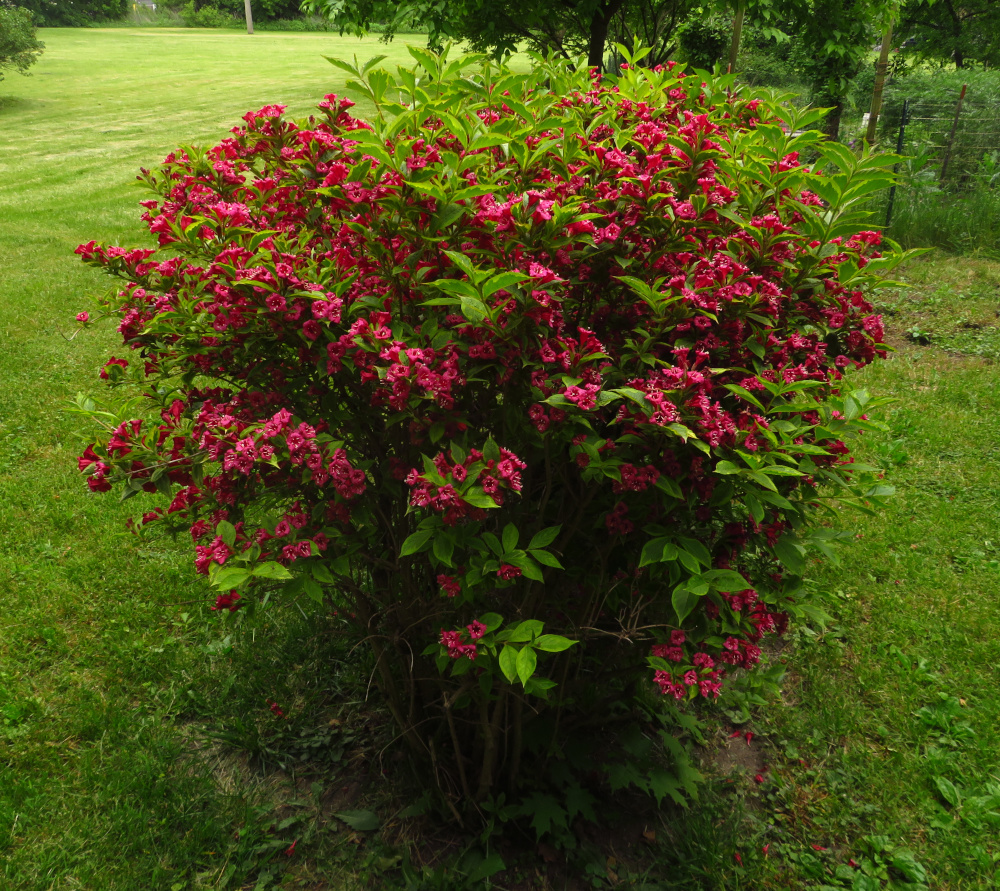
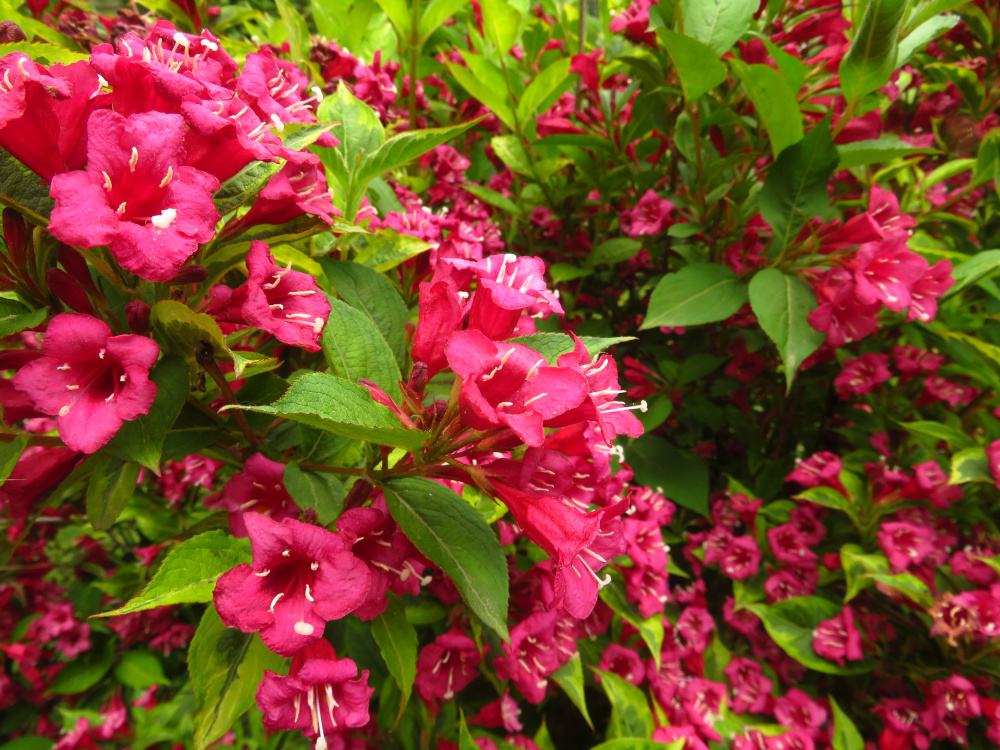
A plant produces fruit because inside the fruit is the seed. For the plant, the seed is a little piece of itself that will live on. It is a plant’s eternal life. The same is true for us. When we bear spiritual fruit, we produce something from ourselves, by the power of God, that will never die. We are producing things that will never be shaken.
So pruning is important because it leads to more fruit. Only the branch that remains connected to the vine can produce fruit. Fruit, in fact, is the proof that the branch is connected to the vine. For God will cut off the branch that doesn’t have fruit, and it will be burned; but he will prune the branch that does have fruit so that it will produce even more. (John 15:2,6)
So take care that your connection to the vine is secure so that you can be fruitful, my friends! Take advantage of every opportunity to grow, and help others to get connected to the vine so that they can grow, too!
It feels amazing to be truly alive, doesn’t it?
Jesus prayed in the garden before he went to the cross:
“Father, the hour has come. Glorify your Son so the can give glory back to you. For you have given him authority over everyone. He gives eternal life to each one you have given him. And this is the way to have eternal life–to know you, the only true God, and Jesus Christ, the one you sent to earth.” (John 17:1-3 NLT)
 The Fullers Four