
From even before dawn this morning, it has been a perfect day. As I write this, it’s partly cloudy, 78 degrees, and everything is absolutely bursting with life! To top it off, tonight is supposed to rain.
You can’t blame me for wanting to be outside, can you?

I know it’s still spring, and the weather can, and will, change on a dime; but there are things happening outside that only happen once a year, and I don’t want to miss a thing.
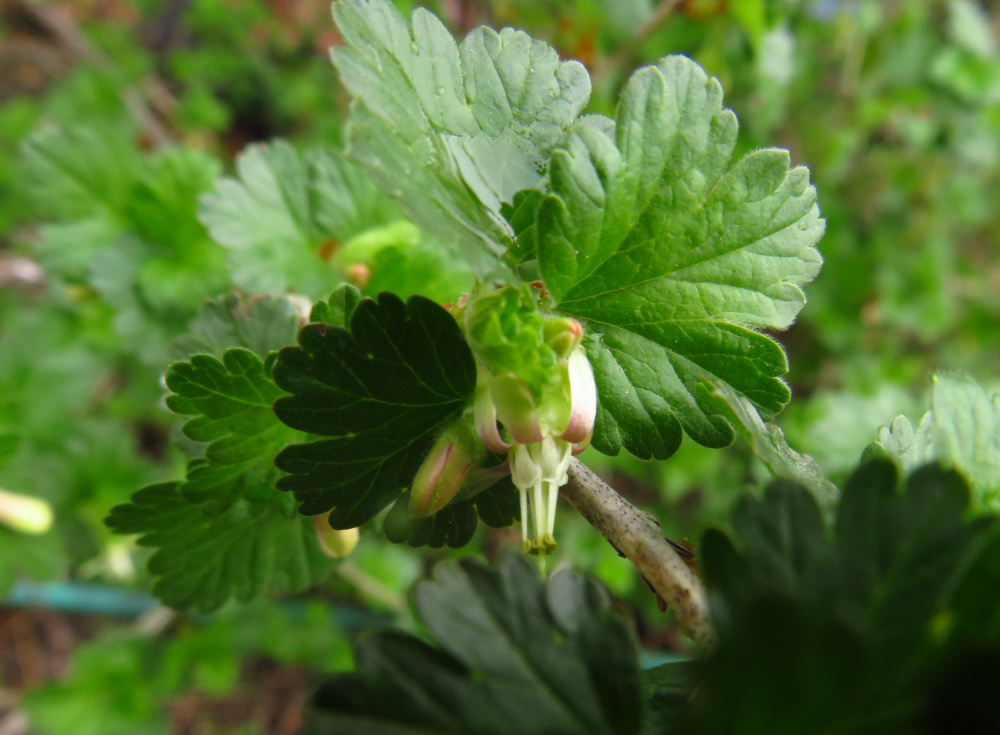
It’s a “Ferris Bueller” kind of day right now, but it’s going to rain tonight. If you don’t stop and look around, you might miss it!
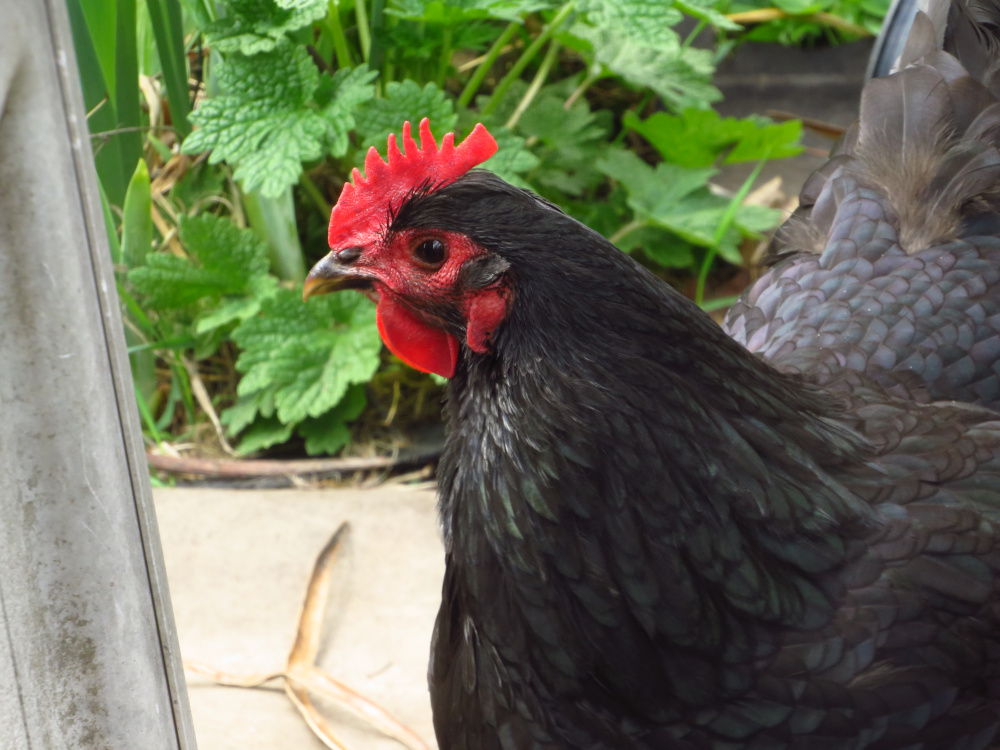
My little black hens are having the time of their lives today. We are tearing out some old structures and the chickens see that the bare earth is filled with tasty things that wiggle and squirm. I am so grateful they eat all the things that give us grief! (mosquito larvae, grubs, ticks, etc.)
So this what I saw today.
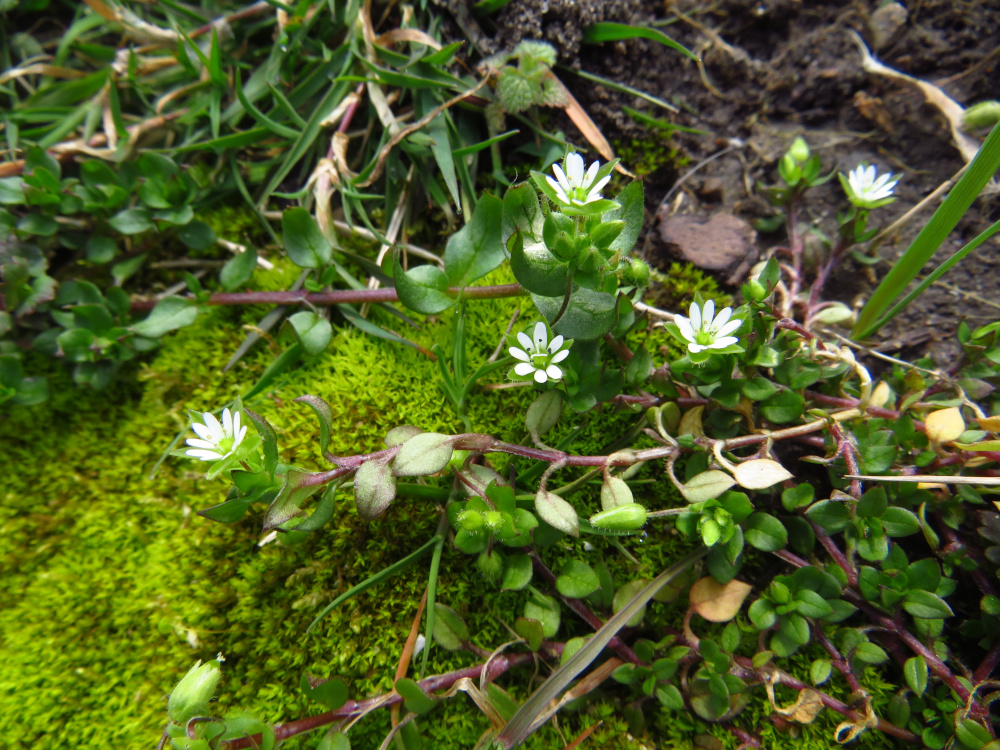
These little wildflowers caught my eye, and since Tony was handy, I asked him about them. Tony loves to talk about herbs, of course, but he was busy.
“That’s chickweed,” he said, and kept moving.
I remember chickweed, only because one of my favorite daytime moths is named the “chickweed geometer.”
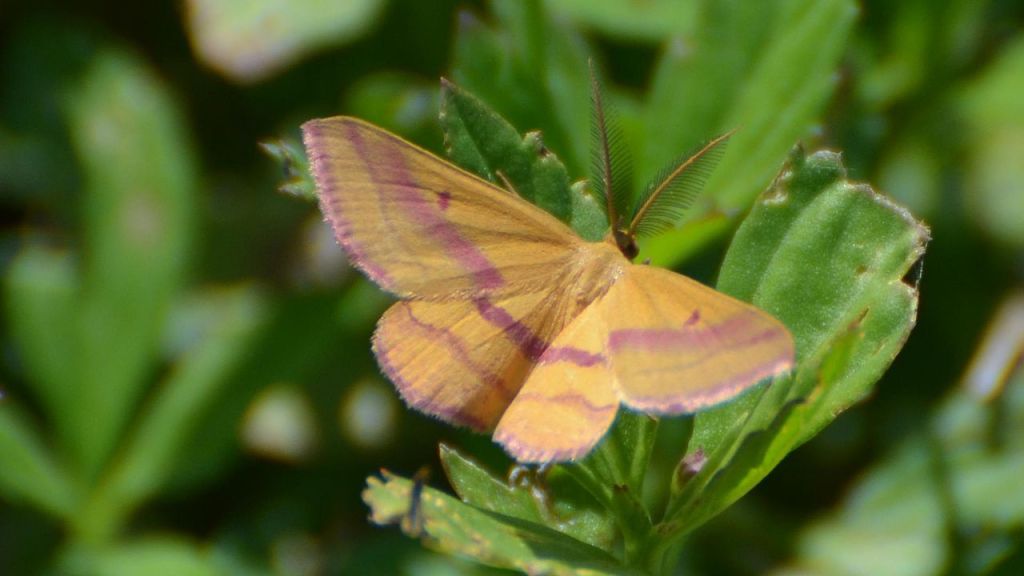
(Photo courtesy of Andy Reago & Chrissy McClarren, who took this photo at Horseshoe Lake State Park in 2013, and shared it with Wikimedia.)
See her feathery antenna?
These moths are named for the way they lay their eggs on chickweed. (They have to place their young on a plant they can live on after they hatch. In this case, the moth’s offspring eat chickweed.)
“It’s also called “Passerina.”
I was lost in remembering the yellow and pink moth, and when Tony tossed that sentence at me, I jolted back to the present.
“Sounds like a main dish at an Italian restaurant,” I called toward his retreating back.
“Birds love it. ” The words came floating back as Tony kept moving.
I’m sure birds love eating chickweed moths, since they love all kinds of insects, but he was still talking about the herb.
I wanted more details, so I went back inside to look chickweed up in A Modern Herbal by Mrs. Maude Grieve. She was an herbalist who used plants to help soldiers during World War I. She compiled her knowledge about herbs in “a delightful volume that has something for everyone.” (Recipes, any stories passed down in oral tradition, scientific names and uses, whatever she knew about each entry.)
When I looked up chickweed, I found the mysterious name Tony had used, “Passerina.” Mrs. Grieve quoted this from John Gerard (who published A General History of Plants in the 1570’s):
“Little birds in cages (especially Linnets) are refreshed with the lesser Chickweed when they loath their meat, whereupon it was called of some “Passerina.”
So, chickweed was used when small caged birds refused to eat, to tempt them back to the table. Interesting. I bet they must have loved it, as Tony said. Maybe that’s why I don’t see it much; my chickens are getting it all.
I went back outside to see what else was happening.
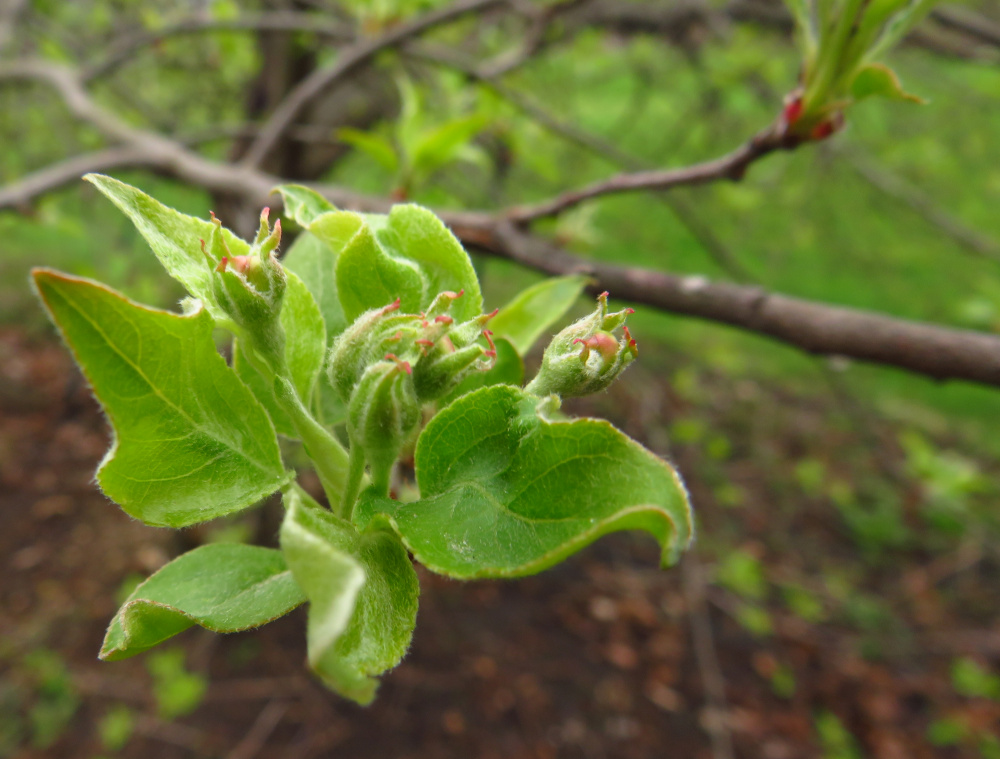
We planted these crab apples as saplings over 25 years ago, and we have enjoyed them so much! I will hate to leave them when we move. We have made so much food from them: applesauce, tasty pink jelly, wonderful juice, and even sweet rolls filled with delicious crab apple butter. It’s encouraging to see the trees are ready to produce again.
And under the trees, I found this!
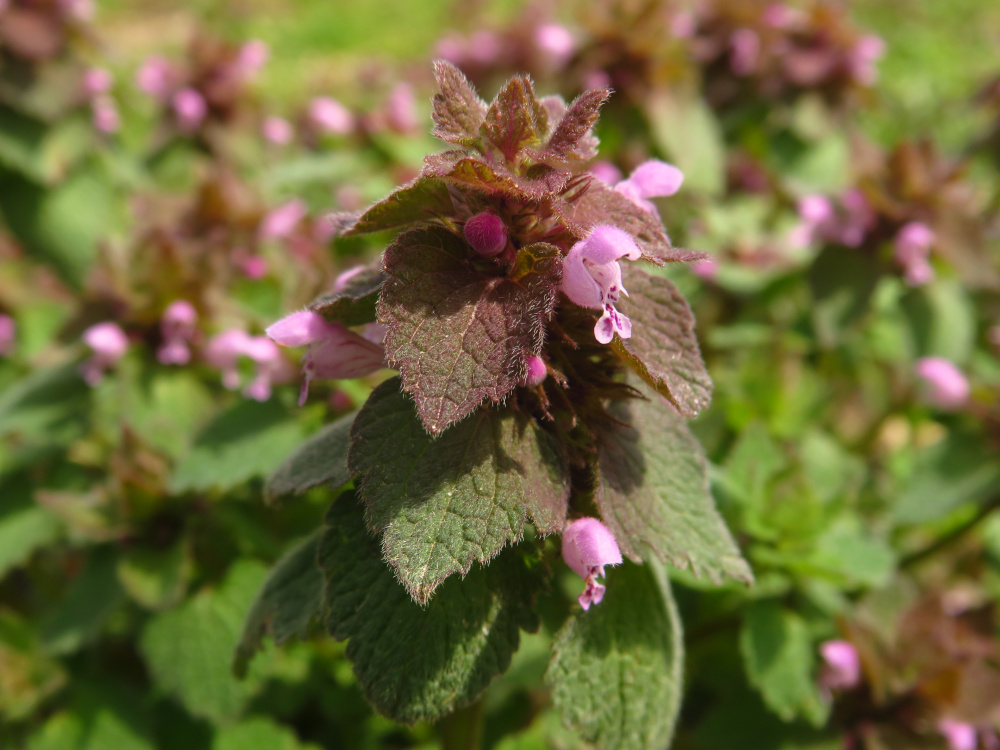
Despite its name (which is one of many common names for this plant), bee nettle doesn’t sting at all. It is a highly nutritious herb that is good for your kidneys, and provides lots of nectar for the first honeybees that come out. Tony said you can include this sweet herb in a salad, but just make sure there are no ants on it!
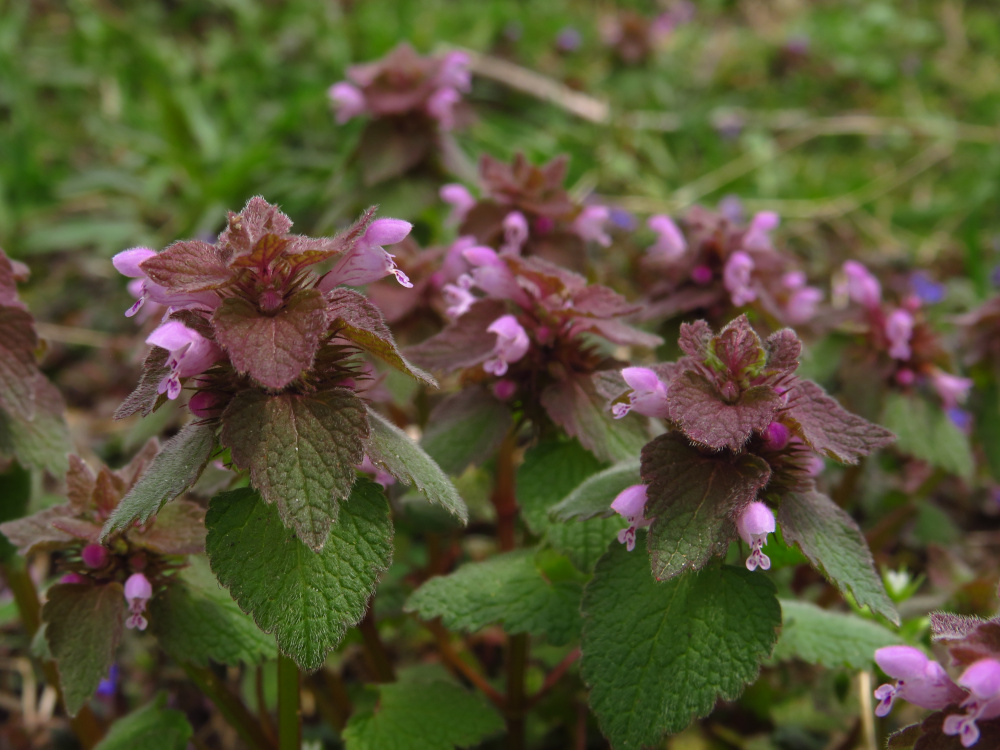
The dark purple could be violets, but they are not. . .
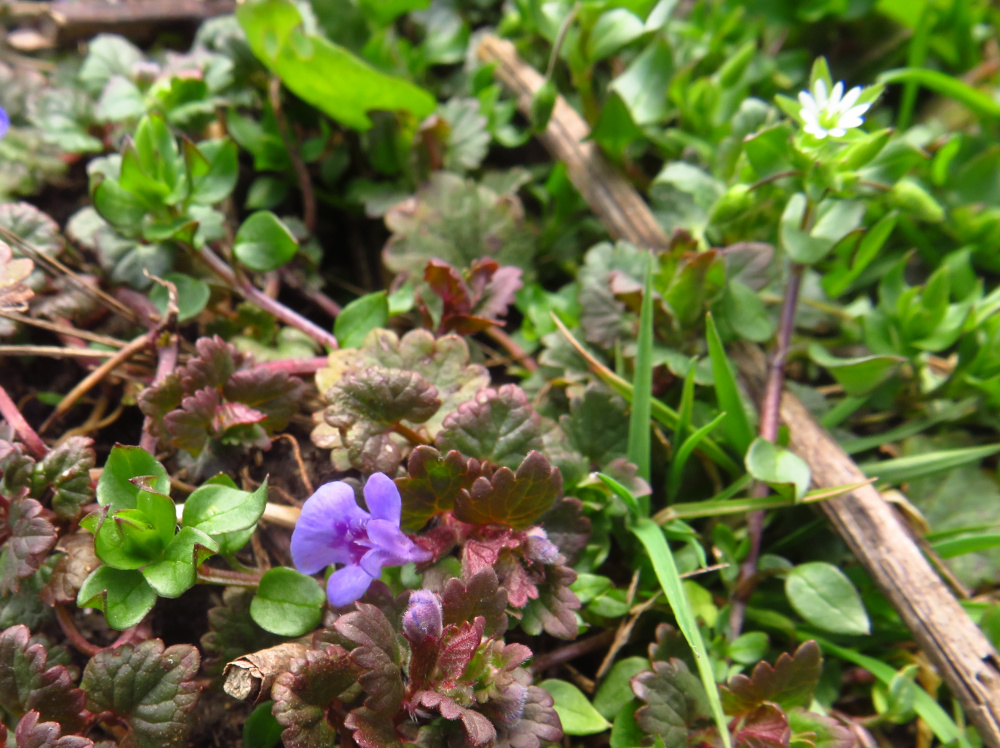
Ground ivy has many uses, but it is often treated as a weed. According to A Modern Herbal, ground ivy has been used as a medicinal herb for headaches when all other remedies have failed (snuff the juice up the nose), as a tonic for the kidneys, as a way to clarify wine, to help with gallstones, tinnitus, deafness, sciatica, ulcers, jaundice. . .more than I want to take time to write. It grows all over the world, even in some arctic regions, so you can probably find it where you are if you look around.
When crushed, ground ivy has a strong balsamic scent. Tony includes it in his “spring tonic,” which is very good for soothing coughs and sore throats, and has really helped us over the flu. (One or two sips and a gargle, and my sore throat is gone!)
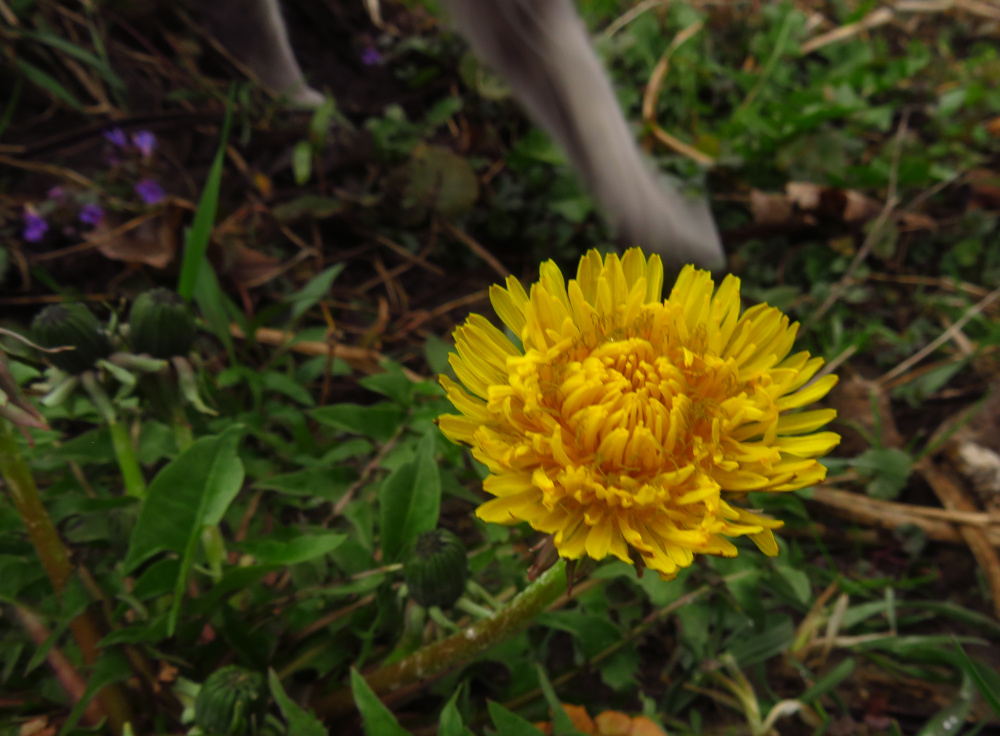

Tomorrow, it will be too late to see the first dandelion. “Firsts” are special. Unique. Maybe even thrilling.
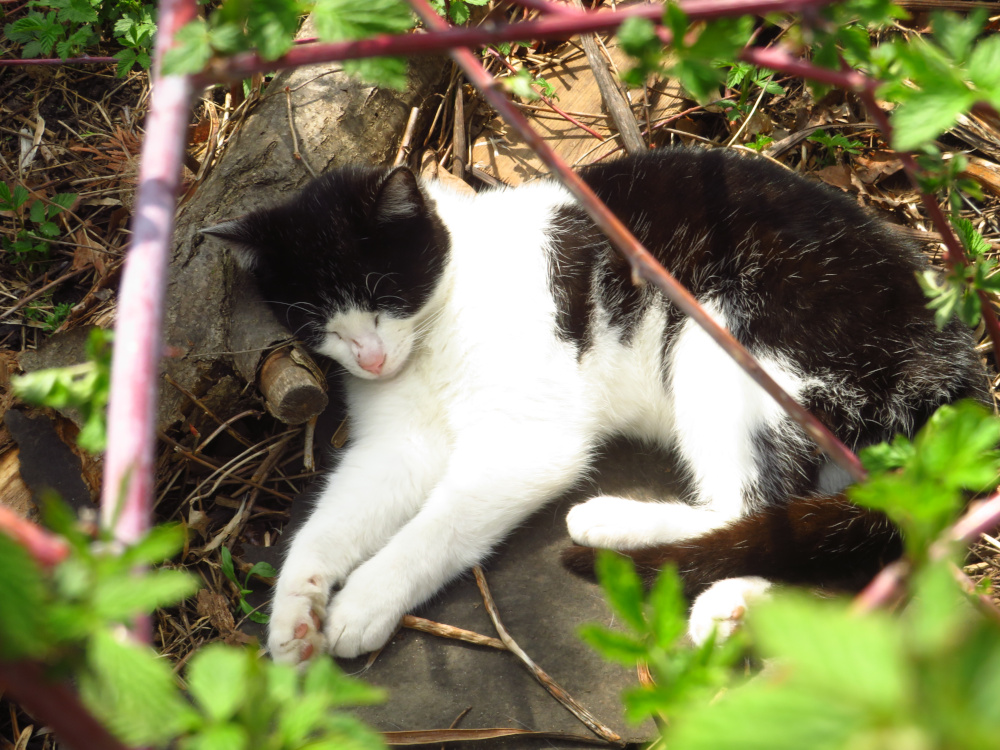
God made all of the things I have written about today, and I remember that in the back of my mind whenever I am away from the things of man.
“He causes the grass to grow for the cattle, and vegetation for the service of man, that he may bring forth food from the earth, and wine that makes glad the heart of man, oil to make his face shine, and bread which strengthens man’s heart.” (Psalm 104:14,15)
We are stewards of this world, and that is both a comfort and a conviction to me. God wants us to take care of the world, not just use it for our own benefit. He made it for HIS glory. He uses it to show Himself to us. He teaches us, giving us visual lessons about Who He is. He made it for Himself, but He put us in charge of caring for it.
And even more amazing, He made us for Himself. He cherishes us, thinks of us and loves us so much more than we can understand while we are still here on this earth.
“Everyone who is called by My name, whom I have created for My glory; I have formed him, yes, I have made him.” (Isaiah 43:7)
You are special, too. Not because of what you do or how talented you are, but because God created you for His glory! He took the time to make you, to lavish His divine attention upon every detail of YOU. One day, while you were still inside your mother’s womb, God designed your eyelashes. Another day, He chose the color of your eyes. He made you in His image and likeness.
That’s why you and I are special. He made us like HIM! And because we are His children, made in His image, we have responsibilities. Our Father will show you the specifics, and that’s why it’s so important to spend time each day, listening to His voice, reading His words, and talking to Him (praying). He likes to spend time with you, and you need Him.
One of our responsibilities is to glorify God. We do that by existing, and by following in His steps. But there’s more: We glorify God by noticing what He is doing and enjoying the blessings He heaps on us every day. I find it so amazing that we please God by simply enjoying what He has made for us!
So get outside and enjoy this spring, my dear friends! This one is special, made more so to you by your attention to it. I hope you enjoy all the wonderful things God wants to show you.
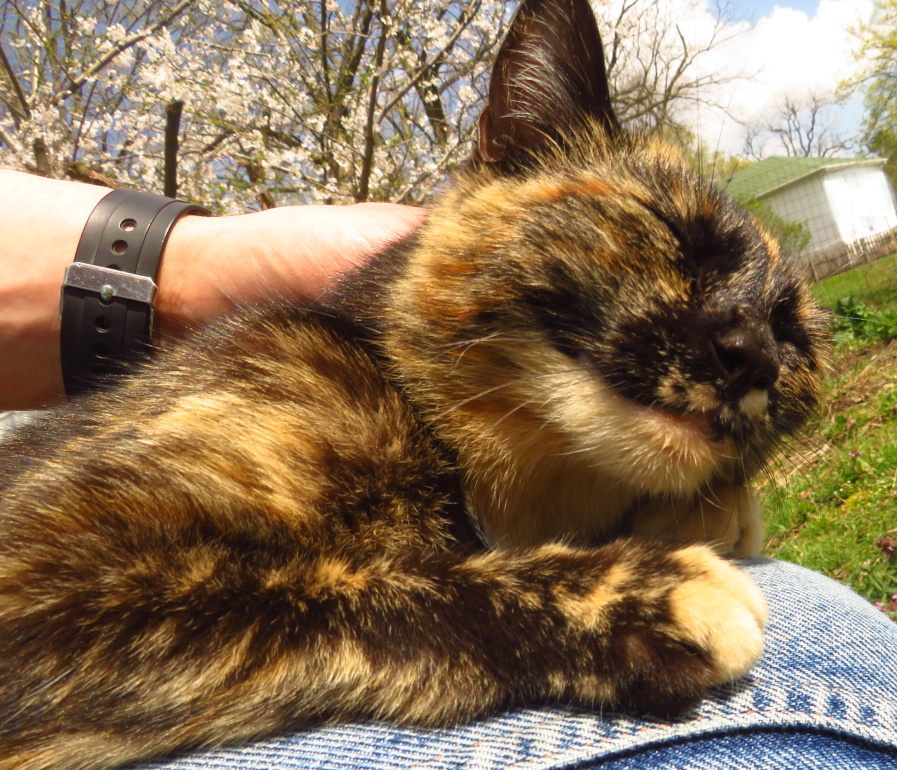
The lesson we learned from her is “Don’t give up on anyone you love.”
Doesn’t she have a pretty smile?
And now I’m going to pull a Columbo on you. (Three eighties references in one post–sorry!) But there’s just one more thing:
This is a quote from Hilda Leyel, the editor of our edition of A Modern Herbal. She used it as the ending paragraph of her introduction:
“Surely it makes a garden more romantic and wonderful to know that Wallflowers, Irises, Lupins, Delphiniums, Columbines, Dahlias and Chrysanthemums, and every flower in the garden from the first Snowdrop to the Christmas Rose, are not only there for man’s pleasure but have their compassionate use in his pain.”
She forgot to mention they are there for God’s glory, too, but I forgive her. For isn’t that a beautiful way to explain how efficient and full of pleasure God’s creation is?
Have a great week! We are praying for you, dear friends; and for every person who reads this post. May God bless and keep you as you follow Him!

