(A story based on real life!)
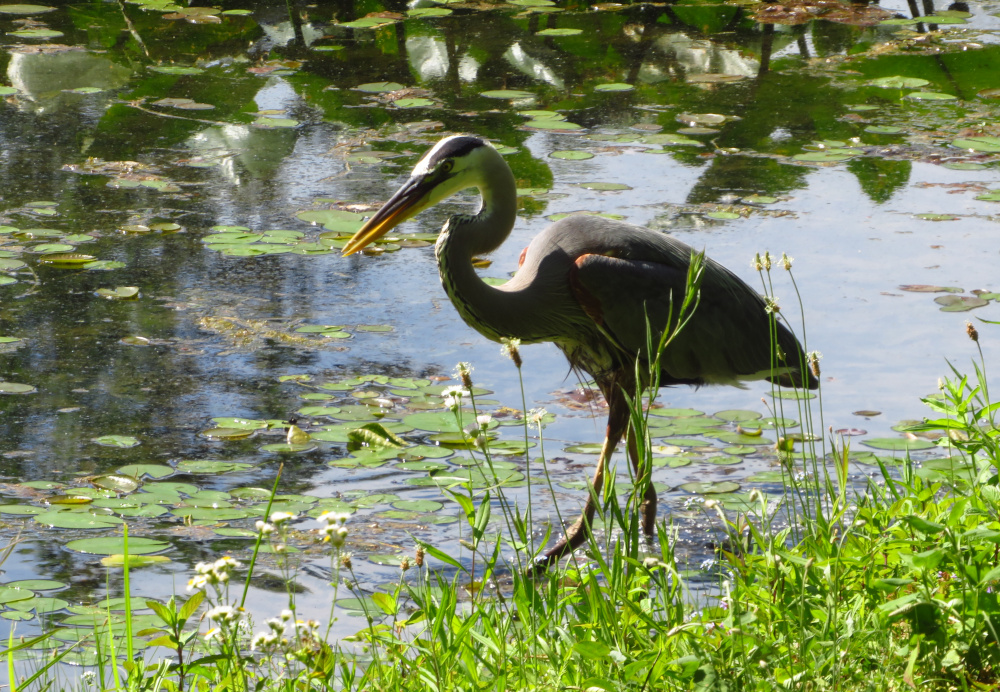
Once upon a time there was a magnificent Great Blue Heron named Harry.
Harry lived in a beautiful park that in former days had been a fish hatchery. A series of spring-fed lakes were the main features of the park, each of which still contained fish, large and small. (This is Lewis Emery Park in Hillsdale, MI.)
Harry lived at the park mostly year-round. Because the lakes were spring-fed, which meant that water from the warm earth came up under the lakes and kept them from completely freezing over in the winter, Harry was able to fish all year round.
Harry was a top predator, fearing almost nothing except for the human visitors that came to the park. And since they were there partly to watch him live his life, the humans really weren’t a problem.
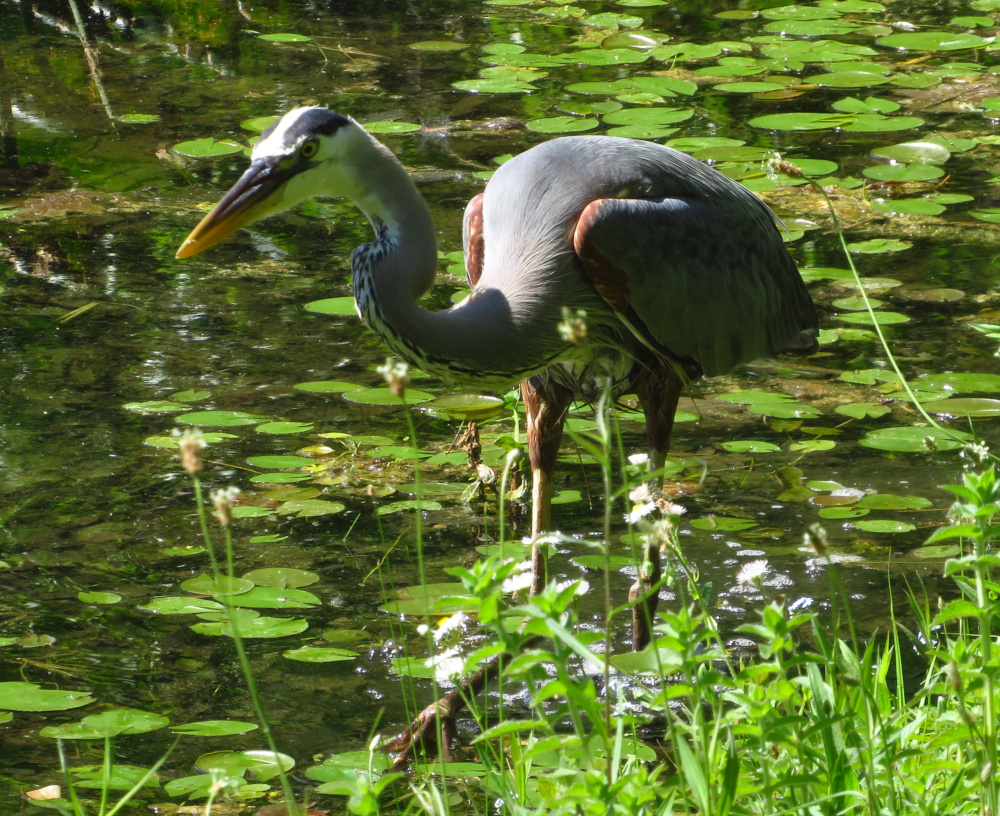
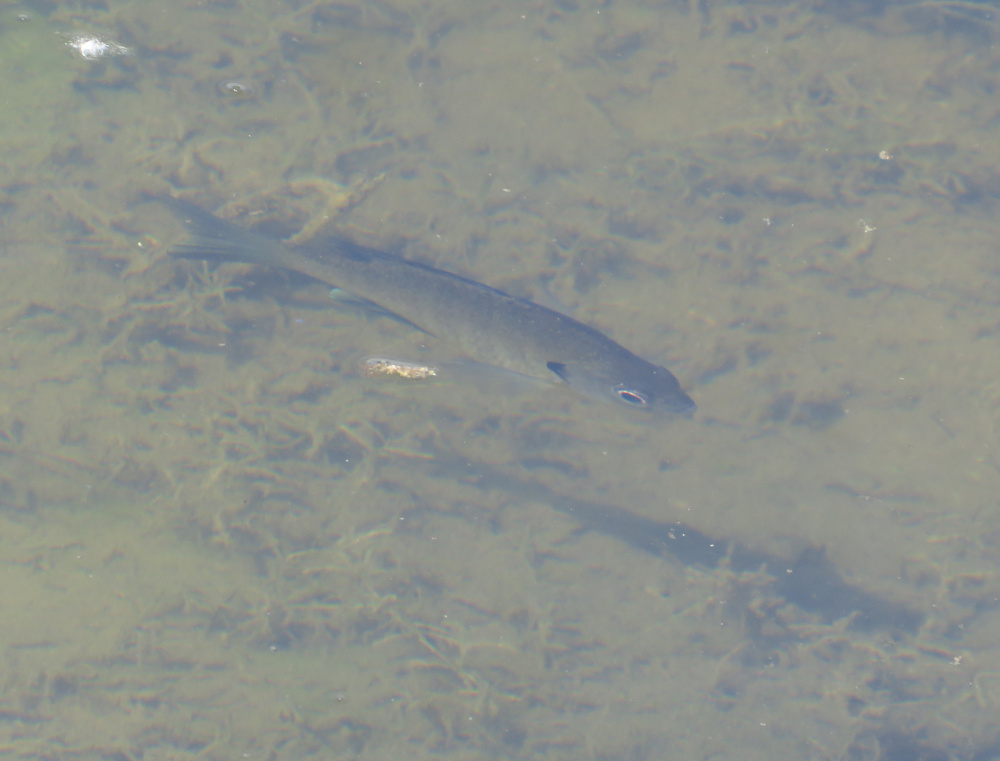
There was a large variety of food for Harry to choose from, but he especially liked fish. Harry could often be found in certain favorite hunting spots, hiding in the shadows on the shallow parts of the shore, waiting for a fish of just the right size to swim near him.
But Harry sometimes liked a change, and at this particular time, he decided to find out how blackbird eggs tasted. With his sharp eyes, he watched a blackbird go to and from her nest, and that is how he discovered it. He took off in all his fabulous glory and flew to a spot very near the nest.
Have you ever seen a Great Blue Heron fly? It is a sight not soon forgotten. The heron stands very tall, about four feet, and that is the same measurement from his bill to his tail. But his wingspan is more than 7 feet wide. He has a long, serpentine neck, and long, skinny legs that are so thin they are barely visible; in fact, they look almost exactly like a cat tail stalk. His beak is 6″ long, thinning toward the tip, which is very sharp and can be used for spearing. (He prefers to swallow his food whole.)
The bulkiest thing about him, when his wings are folded down, is his abdomen. When his neck and wings are folded tightly to take up the least space possible, then the heron walks, with his forked feet lifting and falling very gracefully so that they don’t even make a ripple in the water. He can stand very still for a long time, almost as if he is frozen. He silently watches and listens, perhaps only tilting his head for a better view.
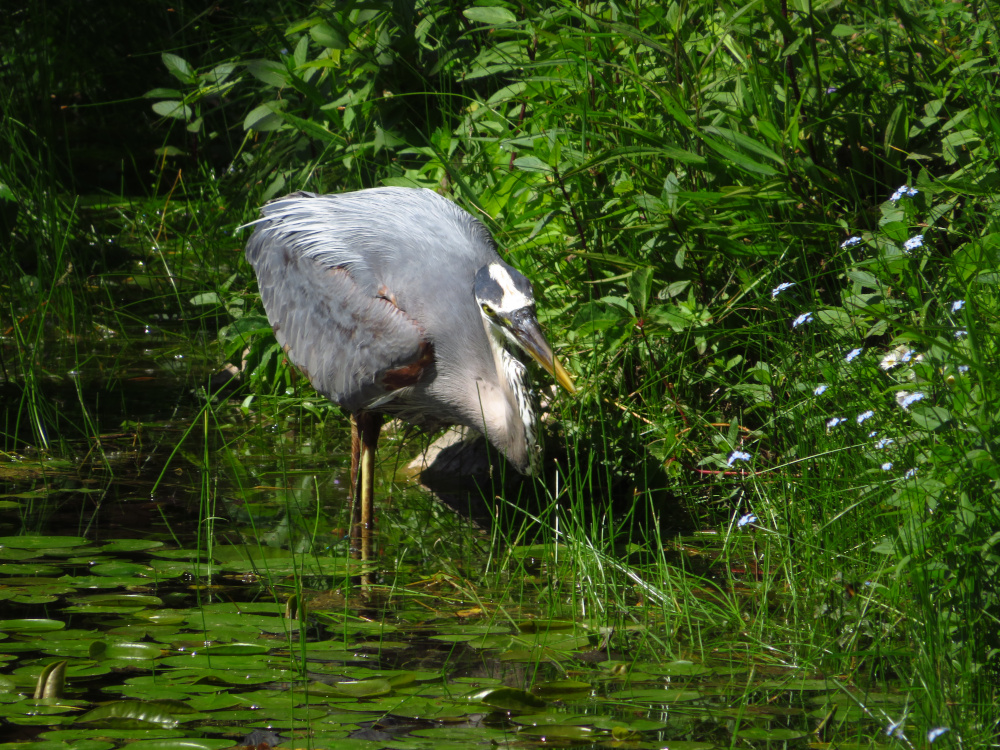
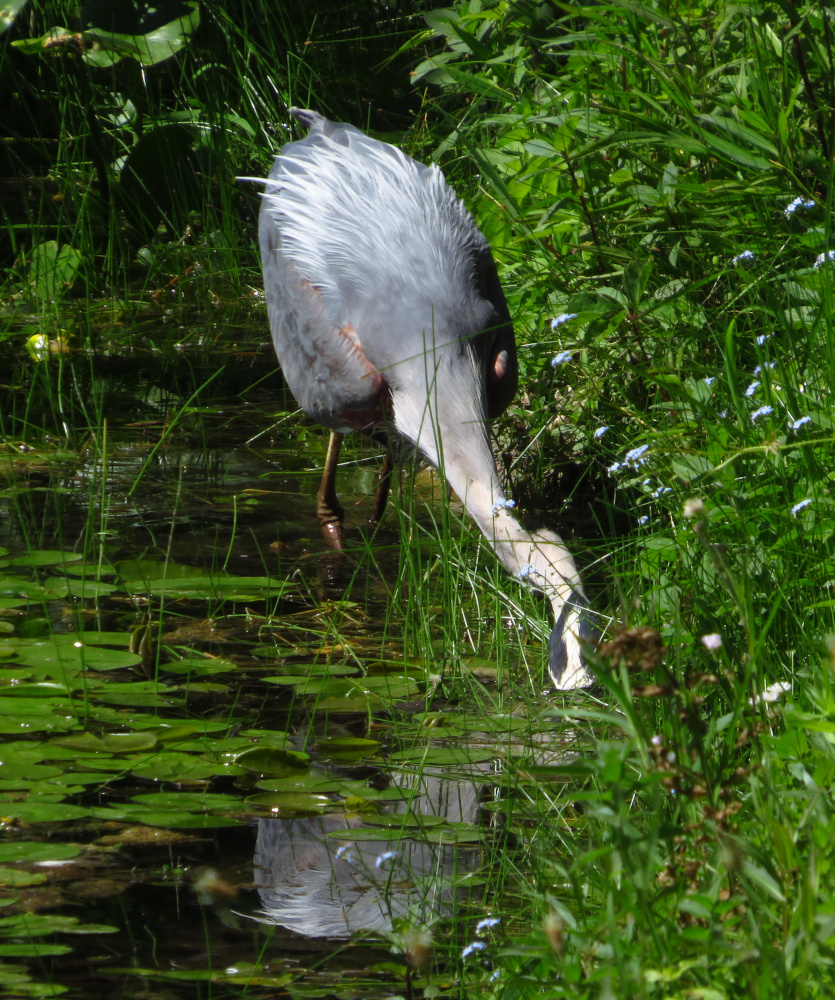
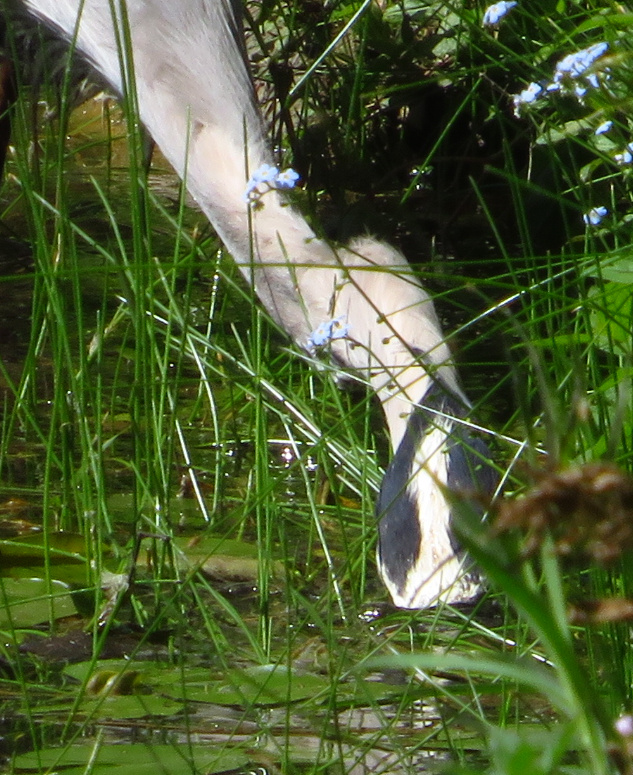
He moves in a peculiar way: He shoots his head forward, his bill completely level with the surface of the water, and then he holds his head in the same place, and carefully moves his body forward to catch up to his head. His neck folds over itself in a graceful curve as he moves forward, so that when he completes the step, he is perfectly compact once again.
When he is in this tight position, his neck is mostly invisible, and his head appears to be attached directly to his abdomen. But this is not the way he rests; this is his striking position.
But when we left Harry, he had just taken off in flight. I say that like it’s nothing, and he does make it look easy, but flight is only easy when you are designed for it.
The blackbird’s nest was set in a young basswood tree that was growing up through the shattered remains of an old basswood tree. The tree was growing in a part of the shore that scooped way back, into the woods, so the nest was in the woods and on the edge of the pond at the same time.
The lady blackbird was completely aware of the heron’s flight, and must have guessed at his intention. As he descended, she fearlessly screamed at him from the nest, and then flew towards him, to make a series of attack flights.
Keep in mind that the Great Blue Heron will eat almost anything it can swallow. The blackbird was just as much prey as her eggs, but she didn’t let that stop her from protecting her babies. She zoomed down, nearly striking his head as she passed over him again and again.
But he was not deterred. He continued stalking directly toward her nest. She flew back and forth over his head, and zoomed down, actually striking the middle of his back.
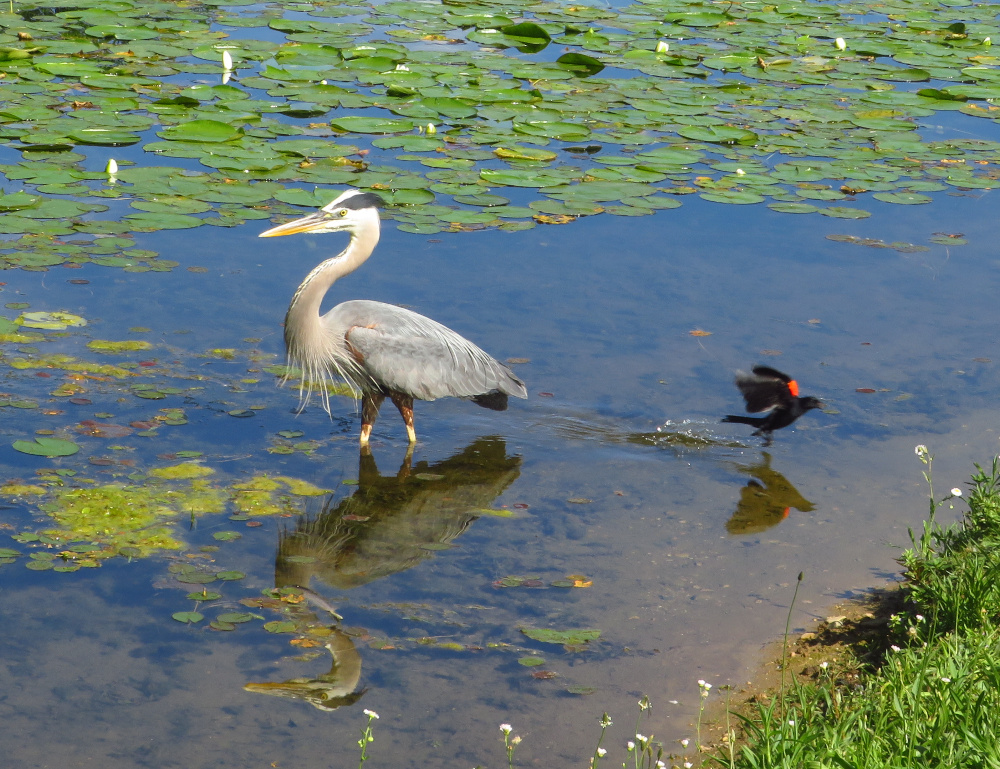
The next time she flew by, she grabbed at his tail feathers.
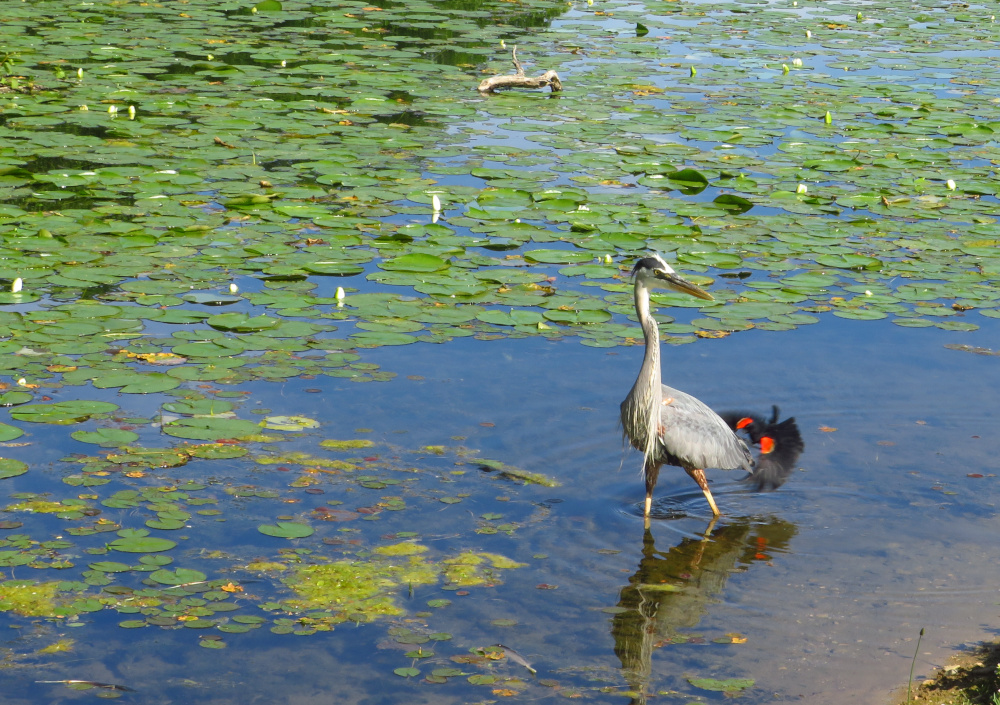
But nothing seemed to work; Harry wouldn’t be distracted. He continued to go slowly and deliberately toward her nest in the cool shadows under the trees by the shore of the lake.
At one point, she seemed to be trying to reason with him. Walking on the ground near him put her in great danger, but she would do anything to distract him from her nest, even if it meant offering herself up as a tasty morsel.
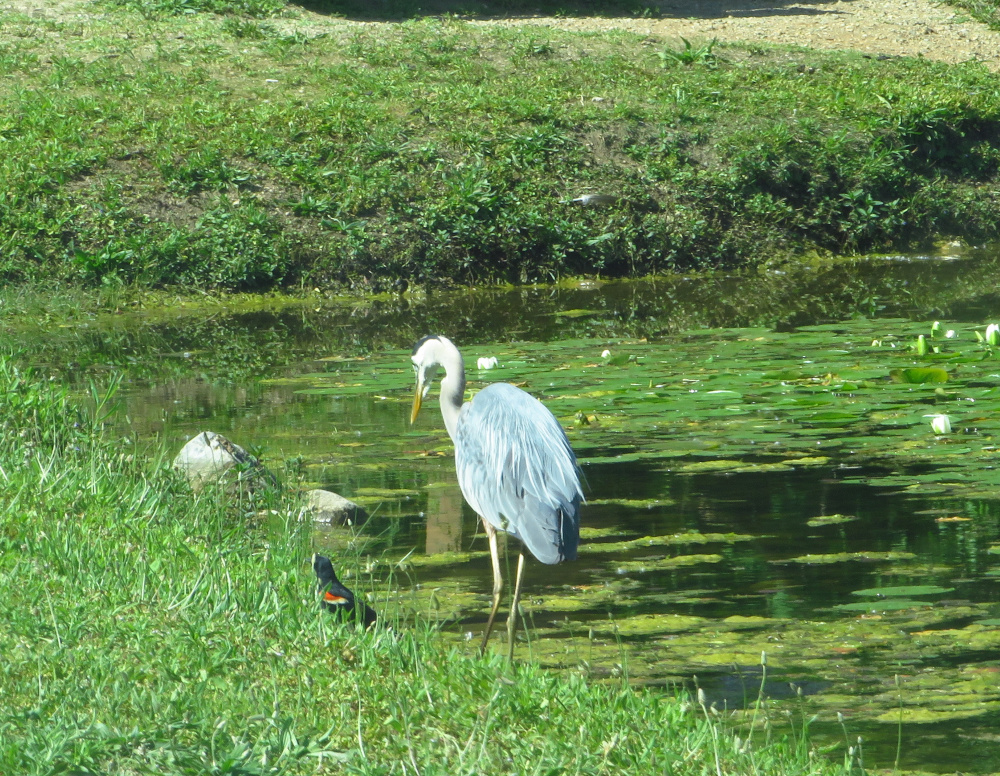
No, this is more like “aggressive negotiations.”
The little blackbird flew up and perched on a nearby tree. She made a series of calls: Each one started with a high, piercing note, that trailed down as it ended. It was an alarm call, but it also sounded a little sad. She made the sound three times, and then there was a pause. In the silence, she suddenly burst out of the shady spot, flying directly over the heron’s head, and fleeing across the lake.
She left her babies! Was she afraid? Nah, not for a second. Remember that jaunty little walk she took on the shore, right next to him? He could have eaten her at any second! But if she wasn’t afraid, what was she doing?
Harry stood in the shadows with his back to the nest as if unsure of what to do. It was as if everyone in the forest stopped breathing, and all the fish stopped swimming; everything nearby seemed to be watching to see if he would go for the nest, now that she was gone.
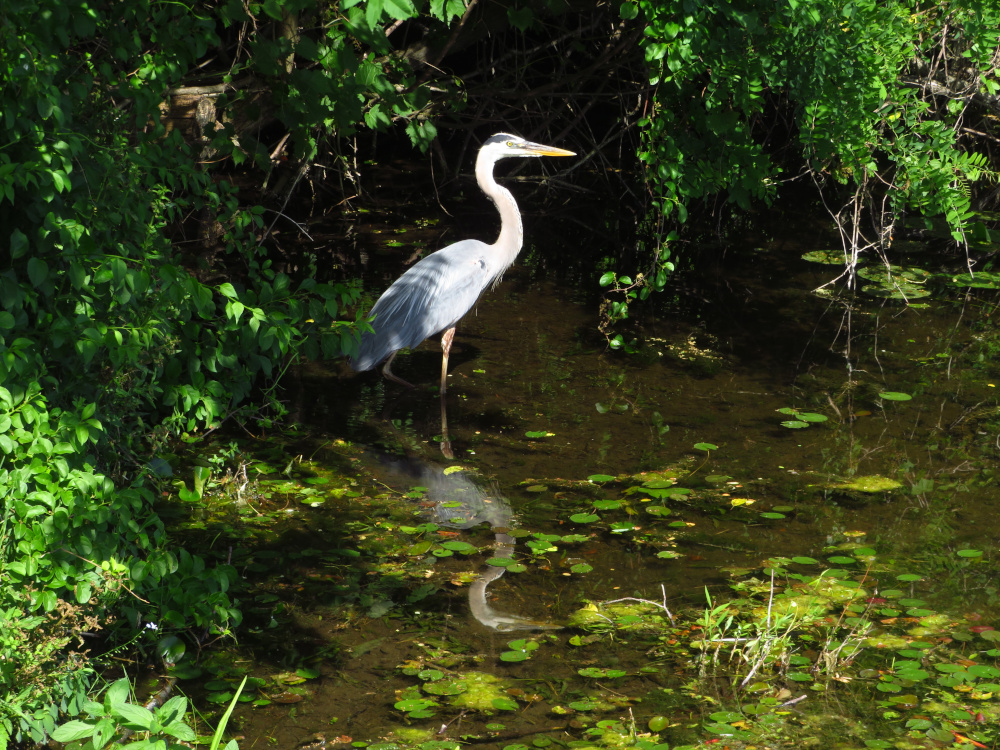
He turned his head, as if trying to follow the flight of the blackbird. He took one step, then another, and stopped. Slowly, his neck sank onto the s-position, and his knees bent low. His wings half-opened over the water and he jumped up, into the sky after her!
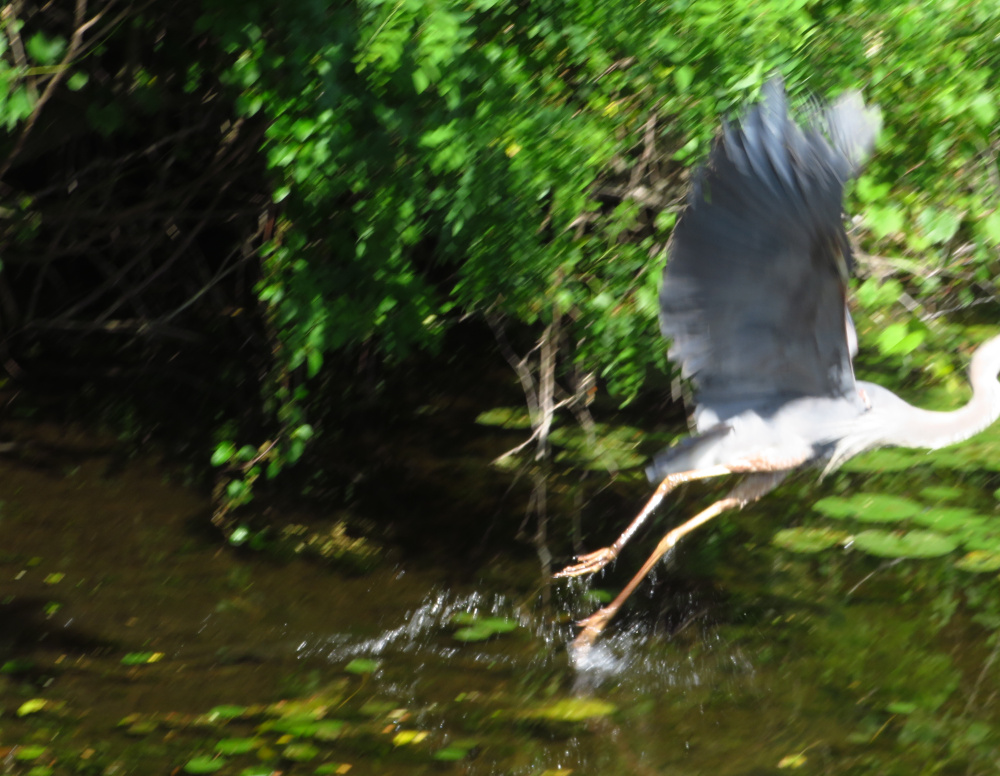
She was long gone, of course. A blackbird is a tiny, stout little bird. She is a fast flier, and has many blackbird friends nearby. They all work together, helping each other as needed.
And so, while the eggs in the little blackbird’s nest remained well-hidden, Harry flew around, hopelessly looking for their mother. And even if he did come back before the blackbird, all of her babies would be safe in their eggs, because they couldn’t give themselves away by crying.
So they all lived happily ever after; at least, as far as I know!


One thought on “Harry and the Blackbird”